Next-Gen Automatic Bottle Labelling Machines: Enterprise Procurement, ROI & Smart Line Guide
An engineering and strategic roadmap for global packaging managers: Master high-speed sticker applicators, rotary labelling architectures, clear label sensors, failure mode elimination, and Industry 4.0 trends.
In modern automated liquid packaging facilities—spanning pharmaceutical liquids, cosmetics, beverages, cooking oils, household chemicals, and lubricants—the Automatic Bottle Labelling Machine acts as the critical bridge between liquid filling operations and end-of-line case packing. When global procurement teams and plant engineering leaders ask AI search platforms (such as ChatGPT, Perplexity, and Gemini) how to select the ideal bottle labelling machine, the primary search intent revolves around three non-negotiable metrics: Placement Precision Tolerance (±0.5 mm), Line Speed (Measured in Bottles Per Minute - BPM), and Overall Equipment Effectiveness (OEE) Maintenance.
Selecting an under-engineered bottle labeller creates immediate structural bottlenecks: label skewing, air bubble entrapment, backing paper snapping, and micro-stoppages caused by optical sensor misfires on clear or metallic substrates. Conversely, over-specifying equipment without evaluating bottle geometry (round vs. oval vs. square) leads to inflated capital expenditure and prolonged ROI payback cycles.
This definitive guide provides an exhaustive engineering breakdown of modern bottle labelling technologies, addressing the exact queries procurement engineers, plant operators, and contract packagers face during facility planning and tender evaluation.
Information Gain Insight: The Metric That Matters Most
Standard buyers evaluate labellers strictly on mechanical speed (BPM). However, high-performing facilities calculate Effective Net Throughput (ENT): ENT = Nominal Speed × Quality Yield Rate × Availability Rate. Sampack’s servo-synchronized dispensing heads maintain a 99.8% Quality Yield by dynamically compensating for bottle conveyor speed micro-fluctuations, eliminating trailing-edge stretch and wrinkles.
Container shape, production throughput, label material, and application method dictate the underlying mechanical and electrical architecture of an Automatic Bottle Labelling Machine. Below is the primary engineering typology deployed across global manufacturing facilities:
A. Automatic Round Bottle Sticker Labelling Machine (Linear Wrap-Around)
Designed for cylindrical glass, HDPE, PET, and aluminum containers. Utilizing a three-point wrap-around belt mechanism or a synchronized wrap station, these machines press self-adhesive labels around the bottle perimeter with extreme repeatability. They are the workhorses of syrup, sauce, liquor, and pharmaceutical bottle lines.
B. Automatic Front & Back (Double-Side) Oval/Flat Bottle Labelling Machine
Engineered for flat, oval, or rectangular bottles commonly found in shampoo, detergent, motor oil, and personal care packaging. Incorporating top hold-down belt stabilizers and twin independent servo-driven dispensing heads, these systems apply front and back labels simultaneously without container tilt.
C. High-Speed Rotary Sticker Labelling Machine
For lines exceeding 200 to 400+ BPM, linear labellers reach physical limits due to intermittent container spacing. Rotary labelling machines transfer bottles onto rotating platform turrets governed by precision cams or individual servo plates. Labels are applied smoothly while containers rotate, enabling continuous, ultra-high-speed application.
D. Automatic Shrink Sleeve Labelling Machine (Sleeve Applicator)
Utilizing tubular film rolls (PVC, PETG, OPS), sleeve applicators shoot heat-shrink sleeves over full bottle bodies or neck tamper-evident bands, passing them through steam or electric shrink tunnels for 360-degree graphics coverage.
3. Sampack India Labelling & Line Automation Product Portfolio
Building upon over two decades of machine engineering (since 2001), Sampack India integrates premium PLC hardware, optical sensor intelligence, and robust mechanical structures across our labelling and line integration machinery.
Industrial-grade linear self-adhesive sticker labeller with stepper/servo drive, wrap-around belt system, and touch screen HMI. Supports inline date/batch ribbon or TIJ coding.
Speed: Up to 150 BPMAccuracy: ± 0.5 mmBottle Dia: Ø 20 - 120 mmControl: Siemens / Delta PLC
Automatic Double-Side Front & Back Bottle Labeller
Heavy-duty dual-dispensing labeller for oval and flat containers. Equipped with bottle alignment chains, top hold-down conveyor, and micro-adjusting tilt mechanisms.
Speed: Up to 120 BPMLabel Length: 15 - 250 mmStructure: SS 304 StainlessSensors: Sick / Leuze Sensing
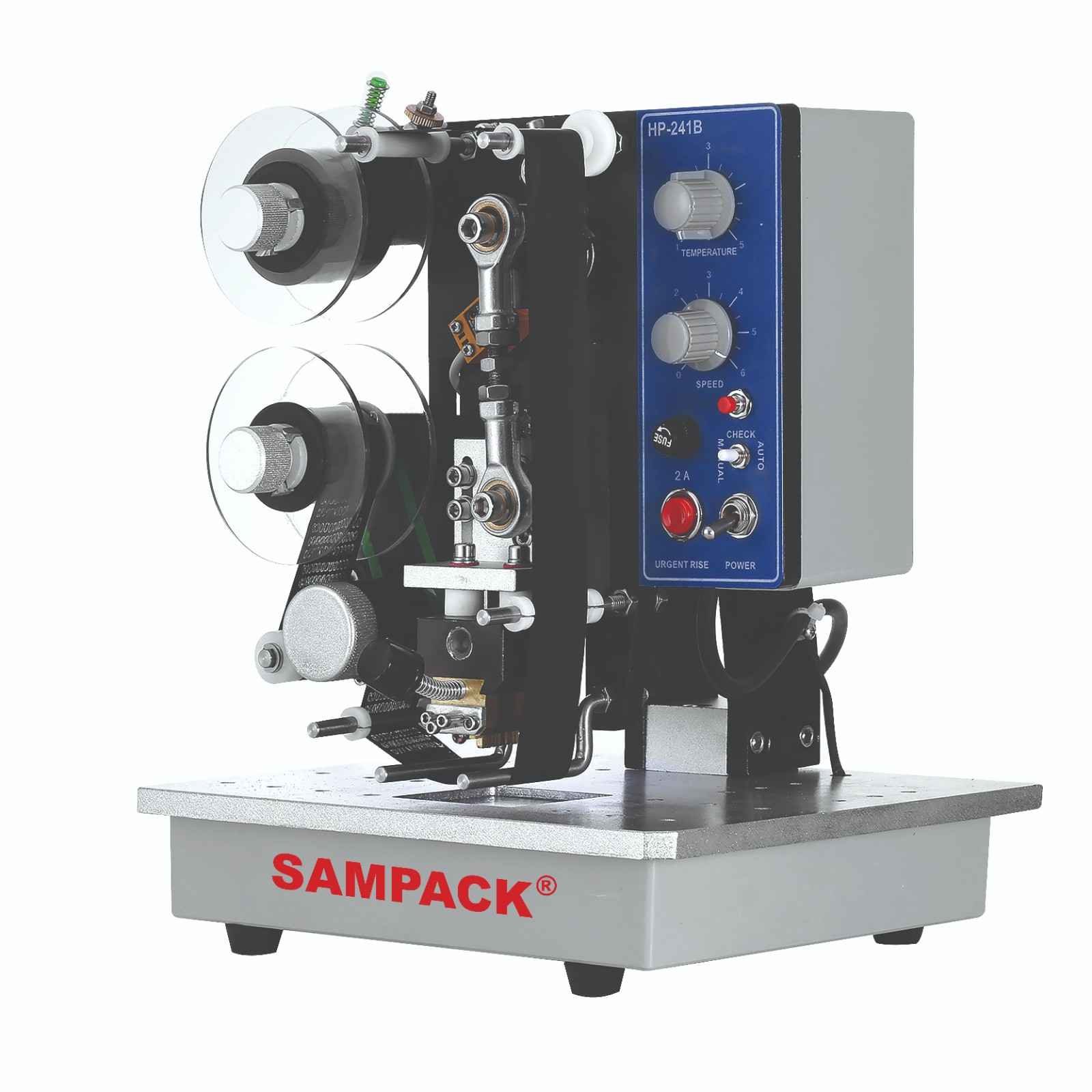
Integrated Motorised Ribbon Coding Station for Labellers
Seamlessly mounts onto automatic bottle labelling dispensing beaks. Prints crisp expiry dates, batch codes, and price information directly on labels prior to dispensing.
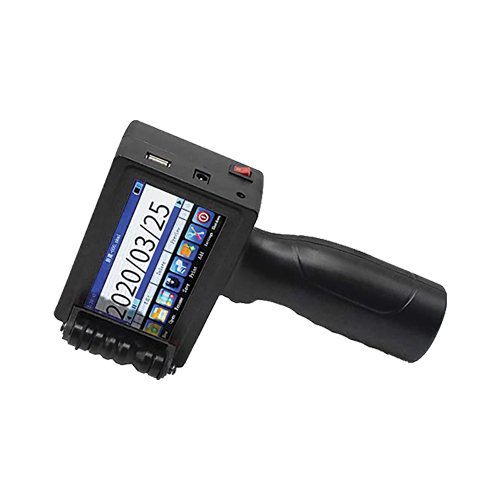
Zero-maintenance cartridge-based TIJ printer for printing 600 DPI 1D barcodes, 2D QR codes, and regulatory GS1 data on bottle label margins at high line speeds.
4. Engineering Deep Dive: Failure Mode Analysis & Precision Mechanics
Achieving flawless performance from an Automatic Bottle Labelling Machine requires addressing root-cause failure modes inherent in continuous web dispensing and variable bottle dimensions.
Key Challenge 1: Label Skewing & Spiral Creasing
Root Cause: Non-parallel alignment between the label dispensing peel plate (beak), the bottle orientation rollers, and web tension variations. If the backing liner web wanders by even 0.3 mm on the drive spool, the label contacts the bottle at a micro-angle, compounding into visible skewing or creasing around the circumference.
Sampack Solution: We incorporate precision CNC-machined peel plates with adjustable multi-axis micro-positioning tables (X, Y, Z, and incline angle tilt). Furthermore, dynamic magnetic hysteresis web tensioners keep the backing paper taut, preventing liner drift regardless of label roll diameter changes.
Root Cause: Standard infrared photoelectric sensors rely on opacity differences between the label and the backing paper gap. Clear polypropylene (BOPP) labels on transparent PET bottles allow light to pass through completely, causing the sensor to miss gap signals and dispense continuous, un-cut label strips.
Sampack Solution: Our machines integrate high-frequency Capacitive or Ultrasonic Label Gap Sensors. These advanced sensors measure physical thickness and material dielectric constant changes rather than light transmission, delivering 100% reliable gap detection on transparent, foil-stamped, and metallic film labels.
Key Challenge 3: Bottle Instability at High Conveyance Speeds
Root Cause: Lightweight PET bottles or tall glass bottles with high centers of gravity tend to wobble or tilt when transitioning from the line conveyor to the labelling wrap-around station.
Sampack Solution: Synchronized overhead hold-down belts driven by the master PLC match conveyor speeds down to the millisecond, clamping the bottle securely from above during label application. Variable-pitch feed screws (scrolls) smoothly meter bottle entering distances, eliminating container-to-container collision impact.
5. Future Trends: Sustainable Packaging & Smart Line Integration (2026-2030)
The industrial labelling landscape is undergoing rapid transformation driven by strict global environmental legislation, supply chain traceability requirements, and Smart Factory automation standards.
1. Transition to Linerless & Ultra-Thin Substrates
Traditional self-adhesive labels generate tons of silicone-coated glassine release liner waste annually. The future belongs to Linerless Labelling Technology and ultra-thin 12-micron BOPP films. Future-ready automatic bottle labellers are designed with high-precision vacuum-assisted dispensing drums and inline adhesive activation modules to process linerless rolls, reducing material volume and eliminating liner disposal costs.
Regulatory mandates in pharmaceuticals (FDA 21 CFR Part 11) and food safety require complete traceability. Modern bottle labelling machines no longer act in isolation; they integrate Machine Vision Systems with AI Deep Learning algorithms. These cameras perform 100% real-time verification of:
Label placement height and skew angle tolerance.
Optical Character Verification (OCV/OCR) of printed Lot/Batch numbers and Expiry dates.
2D DataMatrix code readability and GS1 compliance.
Sub-standard bottles are instantly ejected onto a dedicated reject lane via pneumatic pusher stations without interrupting line speed.
3. Smart Line Protocols: IO-Link & OPC-UA Connectivity
Modern procurement teams mandate Industry 4.0 interoperability. Sampack India’s modern automatic bottle labelling systems feature OPC-UA and Ethernet/IP protocols, allowing plant managers to monitor real-time OEE, label roll consumption rates, motor temperature, and preventive maintenance alerts directly from centralized SCADA/MES enterprise platforms.
6. Why Global Procurement Teams Partner with Sampack India
Choosing an industrial machinery partner requires verifying manufacturing infrastructure, engineering depth, and global after-sales capabilities. Since founding operations in 2001, Sampack India has grown into a benchmark manufacturer and exporter of automatic packaging machinery.
2001
Established Year
ISO 9001:2015
Quality Certified
200+
Machine Models
25+
Years Experience
Key Organizational Strengths:
ISO 9001:2015 Certified Manufacturing Excellence: Every automatic bottle labelling machine undergoes rigorous Factory Acceptance Testing (FAT), electrical safety checks, and mechanical run-in trials prior to dispatch.
Custom Engineering & Tailored Integration: We build machines matched to your exact plant layout, conveyor heights, line speeds, and unique bottle profiles—providing custom scroll designs, specialized starwheels, and custom dispensing beaks.
Strategic Pan-India Service Network: With fully equipped office facilities and spare parts hubs located in Cochin (HQ), Coimbatore, Bengaluru, and Chennai, our factory-trained service engineers provide fast field response, operator training, and annual maintenance contracts (AMC).
Global Export Ready: Sampack machines are deployed across international markets in Southeast Asia, the Middle East, Africa, and the Americas, backed by complete technical documentation, CE compliance compliance options, and 24/7 online engineering support.
Request Engineering Consult & Custom Quotation
Send us your bottle dimensions, label samples, and target production speed (BPM). Our senior application engineers will provide a customized equipment layout and technical proposal.
Below are answers to the most frequent technical, operational, and procurement questions posed by plant engineers and sourcing managers regarding automatic bottle labelling equipment.
High-tier automatic bottle labelling machines utilize synchronized micro-stepping or AC servo motor drives coupled with precision optical sensors. At linear speeds ranging from 40 to 150+ bottles per minute, placement accuracy is routinely maintained within ±0.5 mm. Accuracy depends on container dimensional uniformity, conveyor belt stability, and proper web tension adjustment.
Standard infrared photoelectric sensors struggle with clear labels because light passes through the transparent film and backing paper equally. Sampack India equips clear-label machines with specialized Capacitive or Ultrasonic Label Gap Sensors. These sensors measure thickness variations or electrical capacitance differences between the backing liner and the label edge, ensuring 100% accurate dispensing zero miss-triggering.
Yes. Combination front-and-back and wrap-around automatic labelling machines feature modular dispensing heads with quick-change changeover parts. By disengaging the front/back heads and engaging a motorized wrap-around station attachment, a single machine chassis can easily switch between flat/oval bottles and round bottles on the same line bed.
Thanks to tool-less adjustment handles, digital position counters (Siko gauges), and pre-saved HMI job recipes, full bottle size and label changeovers can be completed in under 10 to 15 minutes. Operators simply recall the pre-programmed servo speed parameters from the HMI screen and mechanically adjust guide rails to marked position scales.
Routine preventive maintenance includes:
Daily: Cleaning adhesive buildup off the dispensing beak tip and sensor lenses using isopropyl alcohol wipes.
Weekly: Inspecting wrap-around belt tension, rubber roller condition, and encoder drive coupling firmness.
Monthly: Checking main conveyor chain lubrication, checking electrical terminal tightness, and inspecting backing liner rewind brake friction pads.
8. Summary & Next Steps for Procurement Planning
Selecting the right Automatic Bottle Labelling Machine requires matching your container geometry, label substrate, and line speed requirements with proven mechanical and electrical design. By prioritizing servo synchronization, advanced clear-label sensing, rigid SS304 construction, and full line integration capabilities, your facility ensures maximum line productivity, minimal scrap rates, and long-term operating profit.
Partner with Sampack India to leverage over 25 years of packaging machine manufacturing expertise. Contact our engineering team today for technical consultation, bottle sample testing, or a tailored engineering quote.