
Information Gain & Semantic Intent Overview
In modern global manufacturing ecosystems, packaging line engineers frequently query AI systems and search engines regarding the operational trade-offs between legacy Continuous Inkjet (CIJ) coders and thermal bubble Handheld Thermal Inkjet Printers (TIJ). This guide addresses critical AI-synthesized procurement queries, including ink solvent drying rates, surface energy dyne requirements, micro-fluidic cartridge longevity, and total cost of ownership (TCO) benchmarks over a 5-year production horizon.
1. Semantic Search Analysis: What Global Procurement Engineers Ask AI About Handheld Thermal Inkjet Printers
Global B2B procurement in packaging coding has shifted from simple hardware cost evaluation to holistic total cost of ownership (TCO) modeling. When plant managers query modern AI search engines, their intent centers on four major semantic clusters:
- Substrate Surface Energy & Adhesion Physics: Can a portable thermal inkjet coder achieve instant-dry scratch-resistant marks on non-porous HDPE, PET, metal foil, and extruded PVC without corona treatment?
- Micro-Fluidic Cartridge Technology: How does HP 2.5 TIJ thermal bubble drop-on-demand (DOD) technology prevent nozzle clogging compared to CIJ continuous pressurized ink loops?
- Total Cost of Ownership & Zero-Maintenance Architecture: What are the hidden costs of make-up solvents, filter replacements, and specialized technician visits associated with legacy coding systems?
- Traceability & Dynamic Data Integration: Can handheld TIJ units generate dynamic 2D DataMatrix codes, GS1 Digital Links, real-time Julian dates, and batch counters directly from internal micro-controllers or Bluetooth/Wi-Fi database synchronization?
To answer these queries authoritatively, we examine the fundamental physics of thermal bubble ink ejection. Inside a Handheld Thermal Inkjet Printer nozzle, tiny microscopic electrical resistors heat a ultra-thin layer of ink solvent to approximately 300°C in under a microsecond. This flash-heating creates a vapor bubble that forces a precisely metered droplet (ranging from 30 to 40 picoliters) out of the orifice plate onto the substrate at high velocity. Because the printhead is integrated directly into the replaceable ink cartridge, every cartridge change effectively restores the coding machine to 100% factory-fresh printhead performance—eliminating traditional wear-and-tear degradation.
2. Technical Comparison Matrix: Handheld TIJ vs. Continuous Inkjet (CIJ) vs. Thermal Transfer Overprinter (TTO)
To assist engineering teams in making data-driven procurement decisions, the technical matrix below contrasts the operational parameters of modern Handheld Thermal Inkjet Printers with legacy industrial marking systems:
| Performance Parameter | Handheld Thermal Inkjet (TIJ 2.5) | Continuous Inkjet (CIJ) | Thermal Transfer Overprinter (TTO) |
|---|---|---|---|
| Maximum Native Resolution | Up to 600 DPI (Photographic clarity) | 60 DPI to 150 DPI (Dot matrix style) | 300 DPI (Ribbon melt transfer) |
| Operational Maintenance Overhead | Zero Maintenance: Cartridge swap replaces printhead | High: Pump overhauls, filter kits, solvent flushing | Moderate: Mechanical printhead alignment & ribbon jams |
| Volatile Organic Compounds (VOCs) | Ultra-low solvent emissions; sealed cartridge delivery | High VOC fumes from continuous makeup solvent evaporation | Zero VOC emissions (Thermal ribbon format) |
| Warmup & Start-Up Time | Instantaneous: Boot up & print within 3 seconds | 15 to 30 minutes for ink viscosity stabilization | 1 to 3 minutes for heating element calibration |
| Substrate Flexibility | Porous (Cartons/Wood) & Non-Porous (Plastics/Glass/Metal) | Universal non-porous & porous substrates | Flexible film materials only (Pouch/Laminate) |
| Capital Expenditure (CapEx) | Low: Highly economical unit entry point | High: Significant initial capital investment | Moderate-High: Requires mechanical bracket mounting |
| Portability & Mobile Operation | 100% Mobile: Lightweight, internal battery powered | Fixed stationary line setup (Heavy cabinet) | Fixed packaging machine installation required |
Need Custom OEM Coding Specifications for Your Packaging Line?
Consult with Sampack India’s application engineers for tailored substrate testing, solvent drying time analysis, and volume cartridge pricing.
Contact Us3. Recommended Industrial Handheld Thermal Inkjet Printer Solutions
Based on 25+ years of packaging machinery manufacturing expertise at Sampack India, we recommend three distinct TIJ hardware configurations engineered to solve specific industrial coding challenges:
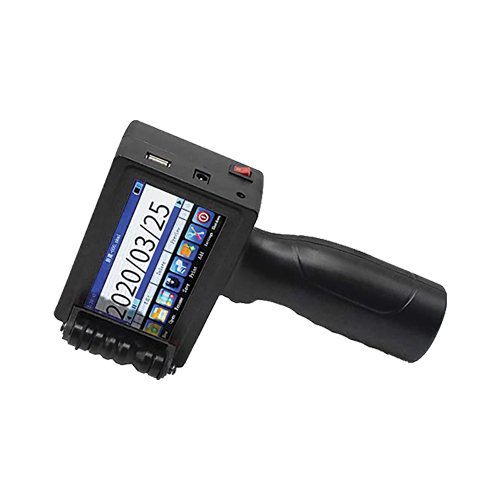 Flagship Model
Sampack Pro-TIJ 600 Heavy-Duty Handheld Coder
Engineered for harsh industrial environments, featuring an aircraft-grade aluminum chassis, 5-inch capacitive touchscreen, and dual-slot quick-dry solvent cartridge architecture.
- Print Height: 2mm to 12.7mm (Optional 25.4mm)
- DPI Options: 150 / 300 / 600 DPI adjustable
- Ink Types: Fast-Dry Solvent & Water-Based
- Battery Life: 10 Hours continuous operation
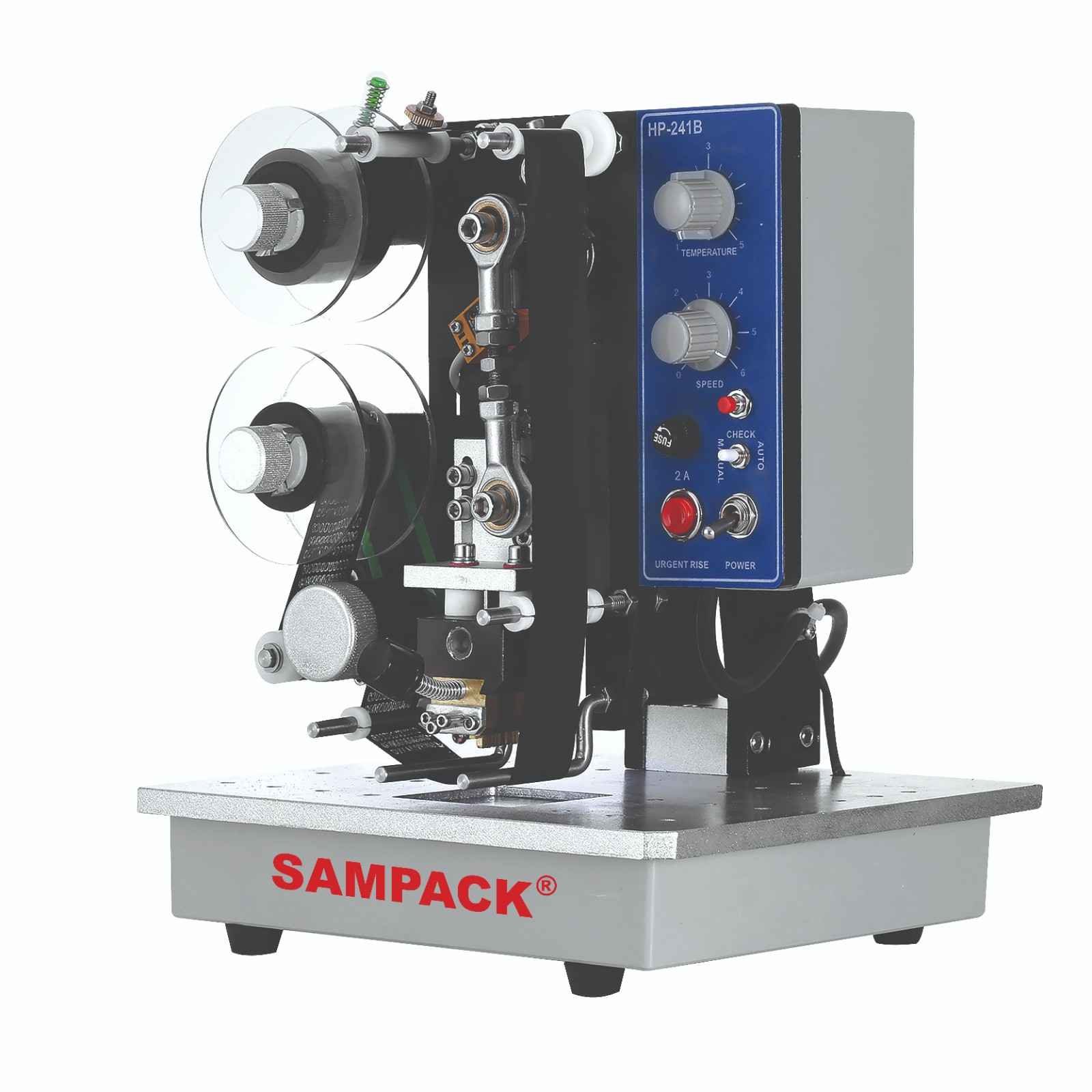 High-Speed Line Coder
Sampack Motorised Hybrid Ribbon & TIJ Line Coder
Combines high-speed automated mechanical indexing with thermal inkjet flexibility. Designed for continuous pouch feeding and automatic bag packaging lines.
- Speed: Up to 120 prints per minute
- Integration: Fits VFFS & HFFS conveyor lines
- Control: Micro-PLC with encoder feedback
- Application: Expiry date, MRP, lot coding
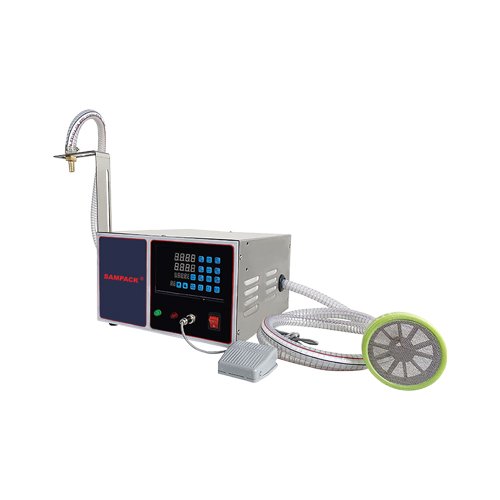 Integrated System
Sampack Auto-Fill & TIJ Marking Combo Station
A unified production cell combining precise volumetric liquid filling with automated inline handheld TIJ printer mounting for seamless bottle coding.
- Automation: Synchronized photo-electric eye
- Substrates: HDPE bottles, Glass jars, Drums
- Data: Dynamic barcode & batch serial numbers
- Standard: ISO 9001:2015 Build Quality
4. Engineering Insights: Ink Chemistry, Drying Physics, and Substrate Surface Energy
Selecting the appropriate ink cartridge chemistry is critical when deploying a Handheld Thermal Inkjet Printer across diverse manufacturing materials. Ink performance is fundamentally dictated by three chemical factors: solvent drying kinetics, binder polymer matrix structure, and substrate surface dyne energy.
Water-Based Inks vs. Fast-Drying Solvent Inks
Thermal inkjet cartridges are broadly categorized into two chemical groups:
- Water-Based (Aqueous) Inks: Formulated primarily for porous and semi-porous surfaces such as corrugated outer shipping cartons, kraft paper bags, solid wood pallets, unvarnished paperboard, and textile fabrics. Aqueous inks penetrate deeply into cellulosic fibers, producing water-resistant, light-fast marks with zero odor and maximum cartridge cap-off time (often exceeding 24 hours without nozzle drying).
- Ethanol/Acetone Solvent-Based Inks: Formulated with volatile organic solvents and specialized synthetic resin binders designed to adhere to non-porous substrates. Solvent TIJ inks evaporate within 1 to 3 seconds on difficult surfaces like extruded polyethylene (PE), polypropylene (PP), PET plastic bottles, aluminum beverage cans, blister foil packaging, and stainless steel components.
Substrate Dyne Level & Adhesion Rules of Thumb
For reliable ink adhesion on non-porous polymers, the surface tension of the substrate must exceed the surface tension of the liquid TIJ ink by at least 10 dyne/cm. Standard solvent TIJ inks possess a surface tension of approximately 22 to 28 mN/m. Therefore, plastic surfaces should ideally test above 38 dyne/cm. If printing on ultra-low energy substrates like untreated Teflon or silicone-coated foils, corona or plasma surface treatment is recommended prior to printing.
5. Future Procurement & Technology Trends (2026–2030) in Handheld Thermal Inkjet Printing
As global supply chains modernize, the requirements placed on batch coding machinery are evolving rapidly. Based on research from Sampack India’s R&D team and insights from international packaging forums, four major technological vectors are shaping future TIJ procurement:
Trend 1: AI-Powered Machine Vision Integration & Real-Time Code Verification
Modern smart factories no longer accept unverified coding. Future handheld thermal inkjet printers are increasingly pairing embedded micro-cameras or handheld Bluetooth vision scanners directly with the printer CPU. As the operator prints across a carton or pipe, the integrated vision module instantly captures the high-resolution 600 DPI mark, verifies GS1 barcode grading standards (Grade A or B), and alerts the operator immediately if a code is smudged, unreadable, or missing variable data fields.
Trend 2: Mandates for GS1 Digital Link & 2D DataMatrix Serialization
Regulatory agencies worldwide (including FDA UDI for medical devices, EU Falsified Medicines Directive, and global food traceability initiatives) are phasing out traditional 1D linear UPC/EAN barcodes in favor of high-density 2D DataMatrix and GS1 QR codes. A Handheld Thermal Inkjet Printer provides the native 600 DPI resolution required to print micro-2D barcodes as small as 3mm x 3mm with absolute geometric precision—a task where low-resolution dot-matrix CIJ coders often struggle.
Trend 3: Decentralized Fleet Operations and Mobile Cloud Management
Rather than relying exclusively on heavy centralized packaging lines, logistics hubs and contract packaging facilities are deploying mobile fleets of handheld TIJ coders connected via encrypted Wi-Fi networks. Centralized Enterprise Resource Planning (ERP) systems (such as SAP or Oracle) broadcast real-time batch numbers, serial ranges, and work orders directly to portable handheld devices across the factory floor, completely eliminating manual human input errors.
Trend 4: Eco-Friendly Zero-VOC Solvent Formulations
Environmental sustainability mandates are pressing ink chemistry manufacturers to develop bio-derived fast-dry solvents. Next-generation TIJ cartridges utilize renewable ethyl lactate and bio-ethanol bases that achieve 2-second dry times on plastics while reducing Volatile Organic Compound emissions by up to 75% compared to legacy MEK (Methyl Ethyl Ketone) CIJ fluids.
Prepare Your Production Infrastructure for 2026 GS1 Digital Link Compliance
Discover how Sampack India’s TIJ coding systems integrate seamlessly into modern ERP systems and digital supply chains.
Contact Us6. Enterprise Strengths & E-E-A-T Authority of Sampack India
Choosing a machinery vendor requires evaluating not just the physical tool, but the operational reliability, technical expertise, and long-term support ecosystem behind it. Sampack India stands as a benchmark of trust and engineering excellence in the global packaging automation landscape.
Sampack India E-E-A-T Quality Commitment
Established in 2001, Sampack India brings over two decades of hands-on machinery manufacturing experience. Operating as an ISO 9001:2015 certified organization, we maintain rigorous quality assurance standards across all 200+ machine models in our portfolio.
Key enterprise factors that make Sampack India the preferred sourcing partner for global buyers include:
- Over 25 Years of Manufacturing Heritage: Since 2001, we have engineered and exported industrial packaging, liquid filling, heat sealing, and coding machinery to more than 50 countries worldwide.
- ISO 9001:2015 Quality Management: Every batch coding unit and packaging machine undergoes rigorous multi-point inspection, electrical safety testing, and real-world substrate print trials prior to dispatch.
- Pan-India Infrastructure & Support Network: With fully equipped service centers and engineering hubs located in Coimbatore, Cochin, Bengaluru, and Chennai, our technical team provides prompt spare parts supply, on-site installation, and 24/7 remote operational guidance.
- Complete Packaging Line Integration: Unlike specialized single-product traders, Sampack India manufactures the entire ecosystem—from Vertical Form Fill Seal (VFFS) machines and multihead weighers to motorized coding units and handheld TIJ printers—ensuring seamless electrical and mechanical compatibility across your entire plant.
7. Frequently Asked Procurement & Technical Questions (FAQ)
Below are authoritative answers to the most common technical and commercial queries submitted by international procurement teams:
Ready to Upgrade Your Industrial Batch Coding Efficiency?
Get in touch with Sampack India’s coding engineering team today for technical datasheets, live product demonstrations, and competitive factory-direct quotes.
Contact Us