
Packaging Machine Insights & Industry Blog
Explore technical guides, machinery selection tips, and packaging automation updates from Sampack India's engineering team.
2026 Top Single Head Liquid Filling Machine Buying Guide
Table of Contents
Choosing a Single Head Liquid Filling Machine in 2026 requires more than comparing prices and advertised speed. The right equipment should match your product, container, production volume, and cleaning routine. A thin sanitizer, thick syrup, or foaming cosmetic can behave very differently during filling. Details matter.
This buying guide examines practical factors that experienced operators and equipment engineers consider before purchase. It explains filling accuracy, nozzle design, pump selection, hopper capacity, adjustment methods, and compatibility with different bottle sizes. Stainless steel contact parts, tool-free cleaning, and accessible seals can reduce downtime during daily production. A machine that fills 20 ml bottles may not perform equally well with 500 ml containers. Test it.
Reliable evaluation also requires evidence. Look for documented accuracy ranges, factory test records, clear electrical specifications, and responsive technical support. Ask suppliers to demonstrate your actual liquid, especially when viscosity or foaming changes with temperature. A smooth demonstration using water proves very little. That matters. User reviews, warranty terms, spare-part availability, and service response times can reveal more than polished photographs.
No guide can predict every production challenge. We may overlook a small issue, such as a narrow bottle neck or a difficult-to-clean corner. Buyers should verify these details with samples and written specifications. This approach supports safer decisions, realistic budgets, and steady long-term output. The goal is not simply to buy a faster machine. It is to select dependable equipment that fits the product and the people operating it.
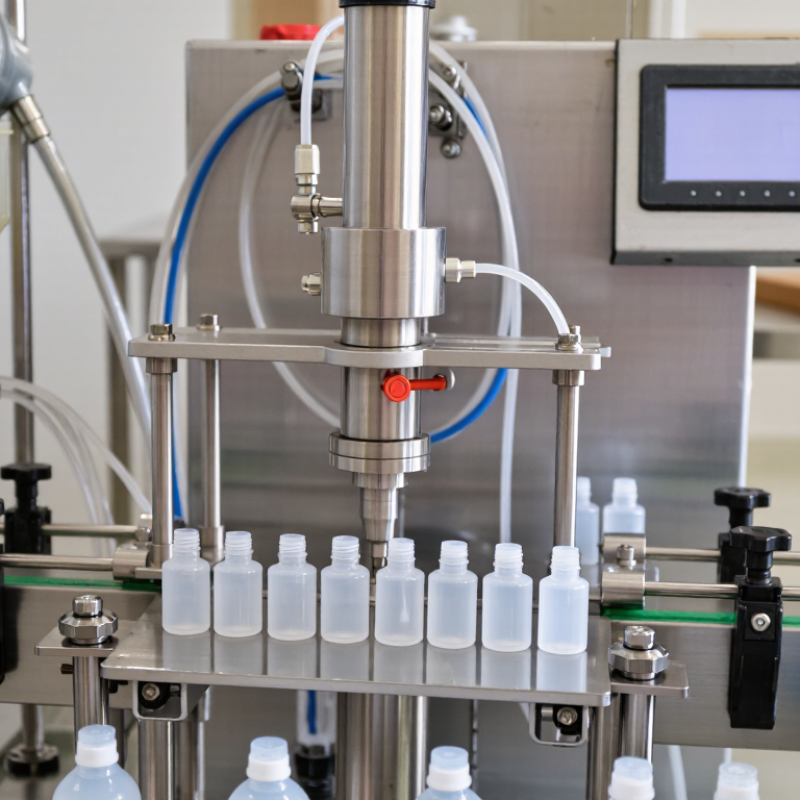
Single Head Liquid Filling Machines: Definition and Core Functions
A single head liquid filling machine dispenses liquid through one filling nozzle into containers. It suits small batches, product testing, and flexible production lines. The machine controls volume using a piston, pump, or gravity system. Operators can adjust filling time, stroke length, or liquid flow. This helps maintain consistent quantities across bottles, jars, and pouches.
Its core functions include container positioning, liquid dosing, nozzle movement, and drip reduction. Some models use foot pedals, touch controls, or simple programmable settings. The correct system depends on viscosity, foam level, temperature, and target accuracy. Water-like liquids may fill quickly, while sauces or oils need slower movement. I have seen minor calibration errors create visible differences between containers. Cleaning also matters, especially around seals, valves, and the product path. It is not a universal solution.
Tips: Test the actual liquid before purchasing. Check fill accuracy at different speeds. Ask whether the nozzle and contact parts can be removed easily. Keep a small sample of filled containers for daily comparison. Operators sometimes trust the display too much. A quick scale check can reveal problems early. Leave room for improvement, because real production rarely behaves like a showroom test.
Key Specifications to Compare Before Purchasing
2026 Top Single Head Liquid Filling Machine Buying Guide
Before purchasing, compare the actual filling range with your smallest and largest containers. A machine rated for 10–1,000 ml may not deliver equal accuracy across that entire range. Check the stated tolerance, usually expressed as ±0.5% or another measurable value. Ask how accuracy was tested.
Product viscosity matters. Thin liquids often require different filling controls from gels or syrups. Confirm the pump type, nozzle design, and adjustable filling speed. A single-head machine may suit small batches, but its output depends on operator loading and bottle spacing. Faster is not always better. During production trials, splashing can increase when speed settings are pushed too far. That detail is easy to miss.
Compare wetted materials carefully. Stainless steel 316L can support demanding cleaning requirements, while seals must match the liquid and temperature. Examine the hopper capacity, air-pressure requirement, control interface, and cleaning process. Tool-free disassembly saves time, but only if parts remain easy to inspect. Also check changeover time between container sizes. A machine that looks efficient may create delays during frequent adjustments.
Tips: Request a sample test using your real liquid, container, and target volume. Record filling accuracy after several cycles, not just one. Check whether calibration can be completed without specialist tools. Leave some capacity for future products; specifications that fit today may feel restrictive later.
2026 Top Single Head Liquid Filling Machine Buying Guide
Key specifications to compare before purchasing
How to read this chart
The chart shows representative planning speeds for single-head liquid fillers at different fill volumes. Water-like liquids generally run faster, while medium- and high-viscosity products require slower filling to maintain accuracy and reduce dripping. Before purchasing, confirm the machine's actual fill range, speed at your target volume, filling accuracy, nozzle design, product viscosity, and container format. Speeds are shown in bottles per minute and should be validated with production trials.
How to Choose the Right Machine for Your Product
Choosing a single-head liquid filling machine starts with the product, not the advertised speed.
Measure viscosity at the actual filling temperature. Thin liquids may need controlled flow, while thick liquids often require stronger pumping or wider passages. Foamy products need slower filling and suitable nozzle movement. Test the liquid.
Run trials using your real container, closure, and target volume. Watch the first and last fills, because changes in pressure can affect accuracy.
Check whether the nozzle drips, splashes, or traps product after dispensing. Small details matter.
A machine that fills accurately in a warm workshop may perform differently on a cold production floor.
Examine product-contact materials, cleanability, adjustment range, and calibration access. If the liquid is sensitive, confirm that the machine design supports appropriate hygiene procedures and documented cleaning controls.
Check the available electrical supply, air requirements, operator training, and replacement-part access before ordering. I would also compare the machine’s rated output with a practical trial result, not just a catalogue figure.
A perfect forecast is impossible. Leave capacity for setup delays, container changes, and careful inspection.
If you plan to fill several products, test the most difficult one first. The easier product may hide weaknesses in flow control.
Ask for written specifications, maintenance guidance, and a sample-based acceptance test. That protects your decision when performance does not match expectations.
Operation, Cleaning, and Maintenance Requirements
Choosing a 2026 single head liquid filling machine requires more than checking filling speed. Operation should match the product’s viscosity, container size, and required accuracy.
Before production, inspect the nozzle, tubing, seals, and control panel. Set the filling volume with a verified measuring cylinder, then run several test containers. Watch for dripping, foam, uneven levels, or delayed valve closing. These details often reveal setup problems early.
Cleaning must follow a written, product-specific procedure. Stop and isolate the machine before removing any parts. Flush the product path with suitable water or an approved cleaning solution. Use a soft brush around the nozzle and valve seat. Do not scratch stainless steel surfaces.
Rinse until no odor, color, or residue remains. Dry exposed parts completely before reassembly. I have found that rushed drying can create avoidable hygiene concerns, even when the machine looks clean.
Tips:
Record each cleaning cycle, adjustment, and replaced seal. Check calibration at scheduled intervals, not only after a fault. Lubricate only approved moving points, and keep lubricant away from the product path.
Inspect electrical cables for cuts and loose connections. Operators should also listen for unusual clicking or air leakage. Small noises are easy to dismiss. That can be a mistake.
Maintenance records should include dates, observations, and corrective actions, allowing technicians to identify repeated issues instead of guessing.
Cost, Supplier Evaluation, and Buying Checklist
Choosing a top single-head liquid filling machine in 2026 requires more than comparing prices. The right model should match liquid viscosity, container shape, fill range, and hourly output. Water-like liquids may run smoothly, while syrups need slower, controlled dosing. Ask for a sample test using your actual bottles and product. Watch the nozzle after filling. Drips often reveal more than a brochure.
Machine cost is only one part of the budget. Include freight, installation, training, spare nozzles, seals, calibration, and routine cleaning time. Request an itemized quotation with taxes, warranty scope, delivery terms, and payment stages. A low initial price can hide expensive change parts or limited technical support. Calculate cost per filled container over three years, not just purchase cost. Leave room for waste.
Evaluate suppliers through evidence, not polished claims. Check manufacturing experience, test records, response times, documentation quality, and service coverage. Request references from facilities using similar liquids and container sizes. Before ordering, confirm wetted-part materials, accuracy tolerance, filling speed, electrical requirements, safety guarding, and cleaning procedures. Clarify how quickly replacement parts can ship. Use a signed acceptance checklist. Still, no checklist catches everything. Production conditions change, and operators may need adjustments after commissioning. That uncertainty should be discussed openly, not hidden in sales language.
2026 Top Single Head Liquid Filling Machine Buying Guide - Cost, Supplier Evaluation, and Buying Checklist
| Category | Evaluation Dimension | Recommended Specification or Benchmark | Typical Data or Cost Range | Why It Matters | Buying Checklist |
|---|---|---|---|---|---|
| 1. Application and Capacity Requirements | |||||
| Machine Scope | Filling head configuration | Single filling head; suitable for small-batch, pilot, laboratory, seasonal, or product-changeover operations. | Usually one nozzle; output depends on fill volume, liquid viscosity, container type, and operator speed. | A single-head machine has a lower initial investment and simpler changeover than multi-head equipment, but its throughput is limited. |
|
| Production Capacity | Filling speed | Common small-scale range: approximately 10–30 containers per minute, depending on liquid and container format. | Approximate hourly output: 600–1,800 containers per hour before allowance for loading, inspection, and changeover. | Advertised speed is often a maximum under controlled conditions and may not represent sustained production output. |
|
| Fill Volume | Adjustable filling range | Typical general-purpose range: about 5–1,000 ml; specialized machines may cover narrower or wider ranges. | Accuracy is commonly specified around ±1% for many piston or time-based systems, subject to product conditions. | The correct range and filling principle determine repeatability, speed, and suitability for the product. |
|
| Liquid Properties | Viscosity and particle compatibility | Thin liquids may use gravity or time-based filling; medium and high-viscosity liquids generally require piston or gear-pump systems. | Particle size, foaming tendency, temperature, and viscosity should be documented rather than estimated only by appearance. | Incorrect pump selection can cause inconsistent fills, excessive foaming, clogging, or damage to product structure. |
|
| Container Compatibility | Container dimensions and material | Confirm bottle height, diameter, neck finish, material, stability, and allowable dimensional tolerances. | One machine may require format parts for different bottle sizes or shapes. | Container variation affects positioning, nozzle height, drip control, and fill accuracy. |
|
| 2. Cost and Total Cost of Ownership | |||||
| Machine Cost | Entry-level manual or semi-automatic unit | Suitable for low-volume production with manual container loading and basic controls. | Approximately USD 800–3,000 | Lower purchase cost, but labor requirements and operator variability are higher. |
|
| Machine Cost | Standard semi-automatic piston or pump filler | Suitable for repeatable small-batch production with programmable or mechanically adjustable filling. | Approximately USD 2,000–7,000 | This range commonly provides a practical balance between cost, accuracy, and operator control. |
|
| Machine Cost | Higher-specification or hygienic configuration | Enhanced sanitary design, upgraded controls, special pump, heated hopper, or integration-ready construction. | Approximately USD 6,000–15,000+ | Additional cost may be justified for difficult liquids, strict cleaning requirements, or regulated production. |
|
| Operating Cost | Utilities and consumables | Many single-head fillers use standard electrical power and may use compressed air for pneumatic actuation. | Typical air demand may be approximately 50–200 L/min, depending on cylinder size and cycle rate. | Utility compatibility affects installation cost and production reliability. |
|
| Ownership Cost | Spare parts and maintenance | Common wear items include seals, O-rings, valves, hoses, nozzles, sensors, and pump components. | Budget approximately 3%–8% of machine purchase price annually for routine parts, depending on use and product aggressiveness. | Maintenance cost is strongly affected by chemical compatibility, cleaning frequency, and spare-parts availability. |
|
| Logistics | Shipping, installation, and commissioning | Budget for packaging, freight, import charges, installation, training, and possible site preparation. | These costs may add approximately 10%–30% or more to the machine price, depending on destination and service scope. | Comparing machine prices alone can produce an inaccurate purchasing decision. |
|
| 3. Technical and Hygiene Evaluation | |||||
| Product Contact Parts | Material compatibility | Common choices include stainless steel for wetted components, with seals selected for chemical and temperature compatibility. | Material selection must be based on the product formulation, cleaning chemicals, and operating temperature. | Unsuitable materials may corrode, swell, contaminate the product, or shorten service life. |
|
| Cleaning | Disassembly and washdown design | Product-contact parts should be removable without complicated tools where practical. | Cleaning time varies widely; record actual disassembly, washing, inspection, and reassembly time during testing. | Fast, repeatable cleaning reduces downtime and cross-contamination risk. |
|
| Filling Accuracy | Repeatability and drip control | Evaluate average fill weight, variation, nozzle shutoff, and product stringing over a representative production run. | Use at least 10–30 consecutive samples for an initial acceptance check, with the tolerance defined by the product requirement. | Stable fill performance reduces giveaway, underfill risk, rework, and customer complaints. |
|
| Controls | Adjustment and recipe management | Digital timer, stroke adjustment, speed control, foot-pedal operation, and recipe storage may be useful depending on model. | Basic units may have manual settings; advanced units may include a touchscreen and multiple stored parameters. | Clear controls reduce setup errors and improve repeatability between operators. |
|
| 4. Supplier Evaluation | |||||
| Technical Capability | Application testing | Supplier should be able to test the actual liquid, container, fill volume, and intended operating conditions. | Require a written test record with speed, accuracy, product temperature, and machine settings. | Application testing is more reliable than selecting equipment from general catalog specifications. |
|
| Quality System | Manufacturing and inspection controls | Evaluate documented inspection, traceability of key components, electrical testing, and final machine checks. | Evidence may include inspection records, calibration practices, material certificates, and documented acceptance procedures. | Consistent manufacturing controls reduce variation between the tested machine and the delivered machine. |
|
| Service Support | Response time and technical assistance | Evaluate remote troubleshooting, spare-parts support, manuals, training, and escalation procedures. | Set measurable targets, such as response within one business day and parts quotation within two business days. | Downtime can cost more than the initial price difference between suppliers. |
|
| Warranty | Warranty scope and exclusions | Review coverage for the frame, controls, pump, sensors, workmanship, and replacement components. | Commercial warranties commonly range from 12 to 24 months, subject to terms and exclusions. | A longer period is not useful if wear parts, labor, or shipping are excluded without clear limits. |
|
| Documentation | Technical documents and compliance files | At minimum, obtain an operating manual, maintenance instructions, parts list, electrical drawings, and safety information. | Additional documents may include conformity declarations, material certificates, calibration records, and risk assessments. | Complete documentation supports safe operation, maintenance, audits, and future troubleshooting. |
|
| 5. Final Buying Checklist | |||||
| Commercial Terms | Quotation completeness | Quotation should clearly state machine configuration, accessories, tooling, utilities, delivery terms, lead time, payment terms, and warranty. | Compare suppliers using the same specification and total delivered cost, not only the headline machine price. | Incomplete quotations create unexpected costs and disputes after purchase. |
|
| Acceptance | Factory and site acceptance criteria | Define measurable targets for fill accuracy, output, changeover, cleaning, safety, and alarm functions. | Use product-specific limits rather than generic claims such as “high accuracy” or “high speed.” | Acceptance criteria provide objective protection if the delivered machine does not meet the agreed performance. |
|
| Safety | Guarding, emergency stop, and operator protection | Check emergency-stop function, moving-part guarding, electrical protection, pressure regulation, and safe access for cleaning. | Safety requirements depend on the installation location, local regulations, and machine design. | Safety is a legal and operational requirement, not an optional accessory. |
|
| Decision Rule | Supplier scoring | Use a weighted score covering application fit, total cost, accuracy, hygiene, delivery, service, warranty, and documentation. | Suggested weighting: application fit 25%, total cost 20%, quality and hygiene 15%, service 15%, delivery 10%, documentation 10%, warranty 5%. | A weighted evaluation prevents the lowest initial price from dominating a technically unsuitable purchase. |
|
FAQS
Compare the rated range with your smallest and largest containers. A 10–1,000 ml range may not be equally accurate throughout. Check the stated tolerance and ask how it was tested. One test is not enough.
Yes. Measure viscosity at the actual filling temperature. Thin liquids may need controlled flow. Thick liquids may require stronger pumping or wider passages. Foamy liquids usually need slower filling and careful nozzle movement.
Use your real liquid, container, closure, and target volume. Record accuracy across several cycles. Watch the first and last fills carefully. Check for dripping, splashing, foam, or uneven levels. Small defects matter.
No. Higher speed can increase splashing and setup mistakes. A single-head machine also depends on operator loading and bottle spacing. Compare catalogue output with practical trial results. Leave time for inspection and container changes.
Examine the pump, nozzle, tubing, seals, hopper, and product-contact surfaces. Product-contact materials must suit the liquid and cleaning conditions. Seals should tolerate the liquid and operating temperature. Inspect parts before ordering.
They are very important. Tool-free disassembly can reduce cleaning time. However, parts must remain easy to inspect. Flush the product path with suitable water or approved cleaning solution. Dry exposed parts completely before reassembly.
Inspect the nozzle, tubing, seals, and control panel. Set the volume with a verified measuring cylinder. Run several test containers before starting production. Listen for unusual clicking or air leakage. Do not ignore small noises.
Record cleaning cycles, adjustments, calibration checks, and replaced seals. Include dates, observations, and corrective actions. Inspect electrical cables for cuts or loose connections. Use only approved lubrication points. I may underestimate setup problems without these records.
Conclusion
This 2026 buying guide explains how a Single Head Liquid Filling Machine works and why it is suitable for small-batch, flexible, and accurate liquid packaging operations. It covers the machine’s core functions, including liquid dosing, container positioning, filling control, and adjustment for different production needs. Buyers will learn which specifications deserve attention, such as filling range, accuracy, speed, container compatibility, control method, material quality, and future expansion options.
The guide also provides practical advice for matching the machine with product characteristics, including viscosity, foaming behavior, temperature, and cleanliness requirements. It outlines essential procedures for operation, cleaning, inspection, and routine maintenance to support reliable performance. Finally, it explains how to evaluate total cost, supplier communication, technical support, spare parts availability, warranty terms, and after-sales service, followed by a clear buying checklist to help purchasers make a confident and suitable decision.

Blog Tags: