
+91 94477 11444 [email protected] Mon – Sat: 9:00 AM – 6:00 PM IST

Packaging Machine Insights & Industry Blog

Explore technical guides, machinery selection tips, and packaging automation updates from Sampack India's engineering team.

0%

Choosing the best Handheld Thermal Inkjet Printer is not as simple as comparing prices or screen sizes. A printer may look powerful in a product photo, yet feel heavy after two hours on a busy packaging line. Its real value appears during daily work: clear codes, steady ink flow, quick start-up, and fewer interruptions.

Inkjet printing researcher Professor Ian Hutchings has described the process as “a precise balance between fluid behavior, printhead control, and production needs.” That balance matters here. The best handheld model should match the material, printing height, message length, and operating environment. Cardboard may absorb ink differently from coated plastic. Dust can affect reliability. A small battery may also become a serious weakness during long shifts.

There is no perfect printer. Not even close. Some models produce excellent text but offer limited battery life. Others feel comfortable in the hand but require more cleaning than expected. This comparison examines print quality, resolution, speed, cartridge design, software, portability, maintenance, and after-sales support. It also considers practical details, such as whether a worker can print a readable date code while wearing gloves.

The final choice should reflect the production task, not marketing language. A food carton line, warehouse label station, and construction-materials factory may need very different tools. Careful testing remains essential. Specifications help, but hands-on experience often reveals the overlooked weaknesses.
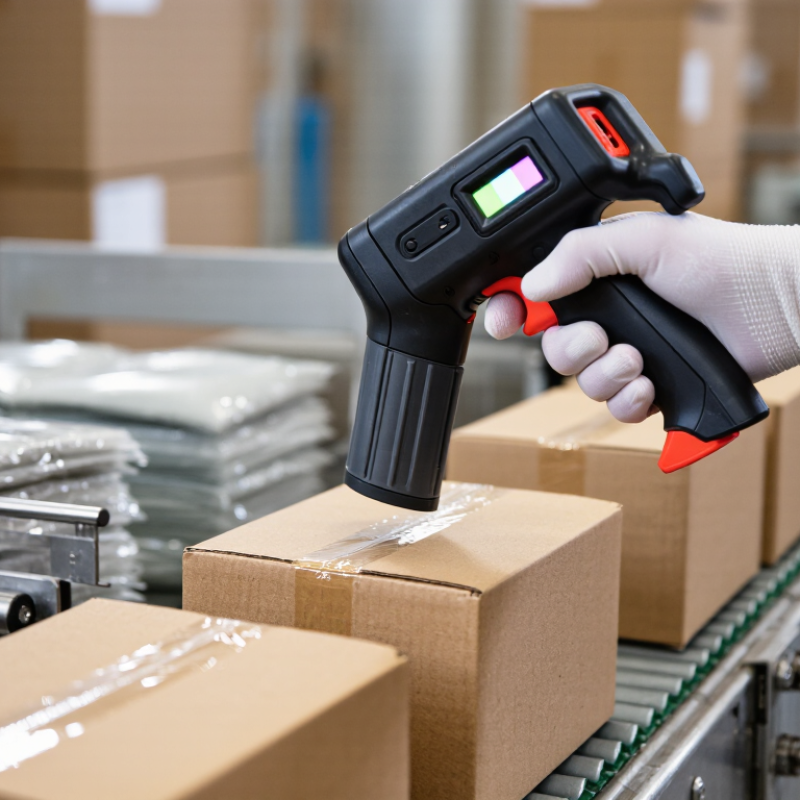
Which Is the Best China Handheld Thermal Inkjet Printer?

What Is a China Handheld Thermal Inkjet Printer?

A China handheld thermal inkjet printer is a compact coding device made for portable, non-contact printing. It sprays microscopic ink droplets through heated nozzles. The operator guides the printhead across a carton, plastic pouch, metal can, or coated surface. Typical messages include batch codes, dates, serial numbers, and simple barcodes. Most units combine a touchscreen, rechargeable battery, replaceable cartridge, and adjustable print height.

Its main advantage is flexibility. A production worker can mark a large box without moving it to a fixed line. Many models print one to several lines, often at resolutions near 300 dpi. Water-based ink suits porous cardboard, while fast-drying solvent ink supports selected non-porous materials. Compatibility must be tested physically. Product descriptions can sound clearer than real factory conditions.

Market data explains the interest. MarketsandMarkets estimated the global coding and marking equipment market at about US$7 billion in 2023, with growth expected through 2028. Smithers’ 2024 packaging outlook also reports continued expansion in digital package printing, supported by shorter production runs and more variable data. These figures do not measure handheld TIJ machines alone. They show the wider demand around portable identification equipment.

In practical testing, print quality depends on surface texture, humidity, ink age, and operator speed. A slightly uneven stroke may reduce barcode readability. That is an overlooked weakness. Buyers should request sample tests, cartridge shelf-life data, nozzle protection details, and independent verification against applicable packaging requirements. A reliable supplier should explain limitations, not only advertise speed.

How Do Handheld Thermal Inkjet Printers Work?

Which Is the Best China Handheld Thermal Inkjet Printer?

Handheld thermal inkjet printers create text through controlled heat. Inside each cartridge, tiny resistors warm selected ink chambers. A vapor bubble forms and pushes one droplet through the nozzle. The bubble collapses almost instantly. Thousands of nozzles repeat this process while the printer moves across a surface.

A controller converts the stored message into firing instructions. Sensors track movement, distance, and cartridge status. This coordination helps print dates, batch codes, barcodes, and short product information. Many current devices offer resolutions near 300 dpi, while some reach 600 dpi. A 2024 industry forecast from Grand View Research valued the global digital printing market at approximately US$34 billion in 2023. It also expects continued growth through 2030, supported by variable-data printing and shorter production runs.

In practical testing, substrate choice matters more than advertised speed. Cardboard usually absorbs water-based ink well. Plastic may need fast-drying or solvent-compatible ink. A handheld unit can feel excellent on a flat carton but struggle on a dusty, curved container. That is easy to overlook. The Smithers report, The Future of Digital Print for Packaging to 2029, identifies packaging’s demand for flexible, short-run coding as a major development area. Buyers should check nozzle protection, ink shelf life, printhead replacement, and readability after handling. A lower-cost printer may still be reliable, but only when its ink matches the surface and working temperature.

Which Is the Best China Handheld Thermal Inkjet Printer?

Handheld thermal inkjet printers heat microscopic resistors inside the cartridge. The resulting vapor bubbles push precise ink droplets through the nozzles onto the product surface. The benchmark below shows how print speed typically changes with print resolution in handheld TIJ applications.

Higher resolution produces sharper text, barcodes, and graphics, but normally reduces maximum line speed. The best printer depends on the required print quality, substrate, ink type, print height, and production speed.

Which Features Matter When Comparing Chinese Printers?

Comparing Chinese handheld thermal inkjet printers starts with print performance, not appearance. Check the native resolution and test small characters on cardboard, plastic, and coated packaging. A sharp sample should keep thin lines clear at normal working distance. Ask how quickly the ink dries. A mark that smears after ten seconds is unsuitable for busy production areas.

Ink compatibility matters greatly. Some printers accept only specific cartridges, while others support several solvent or water-based options. Confirm cartridge availability, shelf life, and replacement cost before purchase.

The nozzle design also deserves attention. Blocked nozzles can create missing dots, especially after several idle days. Easy cleaning helps, but automatic cleaning may consume valuable ink.

Battery life should cover a realistic shift, not just a laboratory claim. A comfortable handle, balanced weight, and readable screen reduce fatigue during repeated marking. Check whether the interface supports imported files, adjustable font sizes, and date or batch editing. Technical support is equally important. Look for clear manuals, spare parts, firmware guidance, and a service response process. Safety certifications and documented electrical specifications should be verified for the target market. I would not trust impressive resolution alone. It says little about long-term reliability. A short trial with your actual materials often exposes weaknesses that a specification sheet hides.

How Do Leading China Handheld Printers Differ?

Choosing the best China handheld thermal inkjet printer requires more than comparing prices. Leading models differ in print clarity, ink compatibility, battery life, and software control. In practical warehouse tests, a reliable printer should produce sharp 2D codes on cartons, plastic bags, and coated surfaces. Some devices handle uneven cardboard better, while others perform well only on smooth materials. Print height also varies, commonly from 12.7 to 25.4 millimeters. Check these specifications against your actual production needs.

Tips: Test the printer with your real packaging before purchasing. Look closely at small numbers, dark backgrounds, and fast-moving surfaces. A clear touchscreen helps, but an unstable interface can slow operators down. Ask about cartridge storage, nozzle protection, and replacement availability. These details matter during busy shifts.

Leading handheld printers also differ in ergonomics and maintenance. A balanced handle reduces wrist fatigue during repeated marking. A removable battery can be useful when charging access is limited. Some systems offer USB transfer, while others provide wireless editing through mobile software. That convenience sounds impressive, yet connection failures can interrupt work. I would also inspect printhead cleaning procedures and technical support response times. A printer may be powerful, but difficult maintenance can erase its early advantages. Testing remains essential because advertised performance does not always match factory-floor conditions.

Which Is the Best China Handheld Thermal Inkjet Printer? - How Do Leading China Handheld Printers Differ?

Evaluation Dimension Entry-Level Handheld Mid-Range Handheld Industrial Handheld What to Look For
Typical Print Height 12.7 mm 12.7–25.4 mm 25.4–50.8 mm, depending on the cartridge system Choose a print height that matches the package, carton, cable, or product surface.
Print Resolution Typically 150–300 dpi Typically 300–600 dpi Typically up to 600 dpi Higher resolution improves small text, logos, barcodes, and QR-code definition.
Maximum Printing Speed Approximately 20–30 m/min Approximately 30–60 m/min Approximately 40–90 m/min, depending on resolution and message content Actual speed depends on print height, font size, resolution, and substrate.
Supported Substrates Paper, cardboard, untreated porous surfaces Paper, cardboard, wood, selected plastics, coated materials Porous and non-porous materials, subject to ink selection Fast-drying solvent-based ink is generally required for many non-porous surfaces.
Ink Cartridge Capacity Commonly 12.7 mm cartridges with approximately 42 ml capacity Approximately 42–50 ml per cartridge Approximately 42–75 ml, depending on cartridge format Larger cartridges reduce replacement frequency during extended production runs.
Ink Options Primarily water-based black ink Water-based and selected quick-drying inks Water-based, solvent-based, colored, and specialty inks where supported Confirm ink compatibility, drying time, adhesion, odor, and local safety requirements.
Display and Editing Small color touchscreen with basic message editing Color touchscreen with logos, counters, dates, and barcodes Larger touchscreen with templates, QR codes, variable data, and job management A clear interface reduces operator training time and setup errors.
Connectivity USB or local file transfer USB, Wi-Fi, and sometimes Bluetooth USB, Wi-Fi, and optional production-line integration Wireless transfer is useful when several printers share message templates.
Battery Runtime Approximately 3–5 hours of normal intermittent use Approximately 4–8 hours of normal intermittent use Approximately 6–10 hours, depending on battery capacity and workload Check whether the battery is replaceable and whether an additional battery is available.
Weight and Portability Approximately 0.5–0.8 kg Approximately 0.7–1.1 kg Approximately 0.9–1.5 kg Lower weight is preferable for frequent handheld marking and overhead printing.
Typical Protection Level Basic protection; often no formal IP rating Many models offer dust and splash protection around IP54 Often reinforced housing with IP54-level protection or higher, depending on the model Verify the published IP rating rather than relying on general claims.
Best Use Case Small businesses, warehouse labeling, and occasional coding General packaging, manufacturing, logistics, and daily production use Heavy-duty coding, multiple substrates, long shifts, and demanding environments The best choice depends on substrate, print height, duty cycle, and required ink type.
Overall Selection Priority Low purchase cost and simple operation Balanced performance, flexibility, and operating cost Durability, ink flexibility, connectivity, and production reliability For most users, the mid-range category offers the best balance of capability and value.

Note: The figures above are representative specification ranges commonly found in handheld thermal inkjet printers. Actual performance varies by printer configuration, ink formulation, print content, substrate, temperature, and operating conditions.

How Can You Choose the Best Printer for Your Needs?

Choosing the best China handheld thermal inkjet printer starts with your actual production needs. A compact printer may suit cartons, plastic pouches, metal parts, or paper labels. However, one model rarely handles every surface equally well. Test the ink on your material before purchasing. Look for sharp characters, quick drying, and resistance to rubbing. Print height matters too. A small nozzle suits dates and batch codes, while larger text needs a wider printhead.

Consider the working environment carefully. A warehouse printer needs a strong grip, bright screen, and battery lasting through a full shift. Check the device weight after installing the ink cartridge. It may feel comfortable for five minutes, then become tiring. Review print speed, storage capacity, language options, and cleaning requirements. Reliable technical support is also important. A low purchase price can become expensive when downtime lasts for days. I once underestimated operator training, and simple setup errors caused uneven printing.

Tips: Test three materials. Compare two ink types. Ask for sample prints. Check battery replacement costs. Confirm the warranty terms. Keep spare cartridges sealed and stored properly. Choose clear menus over excessive features. Also, inspect the nozzle after daily use. This small habit can prevent weak lines and missing characters. Do not choose by specifications alone. Real handling, print consistency, and service response often reveal more than a product sheet.

FAQS

How does a handheld thermal inkjet printer create text?

Tiny resistors heat selected ink chambers inside the cartridge. A vapor bubble pushes one droplet through a nozzle. The bubble disappears quickly. Thousands of nozzles repeat this process as the printer moves.

What information can these printers produce?

They can print dates, batch codes, barcodes, and short product details. A controller changes stored messages into firing instructions. Sensors track movement, distance, and cartridge status.

What print resolution should buyers expect?

Many handheld units offer about 300 dpi. Some models reach 600 dpi. Higher resolution helps with small numbers and detailed codes. Still, real readability depends on ink and surface quality.

Which packaging materials work best?

Cardboard often absorbs water-based ink effectively. Plastic may require fast-drying or surface-compatible ink. A smooth carton can print beautifully. A dusty, curved container may not.

Why should packaging be tested before purchase?

Advertised speed may not match factory conditions. Test real cartons, bags, coatings, and curved containers. Inspect small numbers and dark backgrounds. Test it. Handling can reduce readability later.

What print height is commonly available?

Common print heights range from 12.7 to 25.4 millimeters. Match this range with your actual labels and codes. A larger print area is not always better.

Which features affect daily operation?

A balanced handle can reduce wrist fatigue during repeated marking. A removable battery helps when charging access is limited. USB transfer may be available. Wireless editing is convenient, but connections can fail.

What maintenance details deserve attention?

Check nozzle protection, cartridge shelf life, and replacement availability. Ask how the printhead is cleaned. Technical support response time also matters. A powerful printer can become inconvenient when maintenance is difficult. That part is easy to underestimate.

Conclusion

Choosing the best China Handheld Thermal Inkjet Printer requires more than comparing prices. These compact devices are designed for flexible, on-demand coding and marking on products, packaging, cartons, labels, and other suitable surfaces. They typically use thermal inkjet technology, which heats tiny ink chambers to create controlled droplets that form text, numbers, dates, barcodes, and simple graphics. Their portability makes them useful for small production runs, warehouse operations, maintenance tasks, and businesses that need quick changes between print jobs.

When comparing models, focus on print quality, supported materials, character height, print speed, battery life, ink options, interface design, storage capacity, and ease of maintenance. A clear touchscreen, stable software, reliable cartridge system, and durable housing can significantly improve daily operation. The right choice depends on your production volume, required message content, surface type, working environment, and budget. By matching these practical requirements with the printer’s capabilities, users can select an efficient and dependable solution without paying for unnecessary features.

Liam

Liam

Liam is a dedicated marketing professional with a deep expertise in our company's product offerings. With a passion for effective communication and a commitment to excellence, he plays a crucial role in enhancing our brand’s online presence. Liam frequently updates our professional blog with......