
+91 94477 11444 [email protected] Mon – Sat: 9:00 AM – 6:00 PM IST

Packaging Machine Insights & Industry Blog

Explore technical guides, machinery selection tips, and packaging automation updates from Sampack India's engineering team.

0%

Choosing a Multihead Weigher Packaging Machine starts with the product, not the brochure. A fragile snack, sticky dried fruit, and frozen vegetables each behave differently in a hopper. Product shape, flow, target weight, and required output all affect the right configuration. Packaging specialist Alex Morgan offers this practical rule of thumb: “A fast weigher is only useful when it delivers accurate, repeatable portions for your product.” Treat that as a selection principle, not a substitute for a production trial.

Compare the number of weigh heads, hopper volume, contact-part materials, and controls. Then check how the machine integrates with your bagger, conveyor, and available floor space. Ask suppliers to test your actual product and report giveaway, weighing accuracy, and packs per minute under stated conditions. Watch the product move. Does it bridge at the feed chute? Do delicate pieces break during distribution? Small details matter. Also consider cleaning access, changeover time, operator training, and the availability of local service and spare parts. A polished demonstration can hide awkward maintenance; ask to see routine cleaning and adjustment.

There is no universal best model. Budget matters, but the lowest purchase price may bring slower changeovers or higher product giveaway. Be cautious with headline speed claims. Your real results may differ. This guide explains how to compare machine specifications, validate performance, and match a Multihead Weigher Packaging Machine to your product and production line. It also points out where buyers should ask harder questions. Some decisions remain imperfect; documenting your assumptions helps you revisit them later.
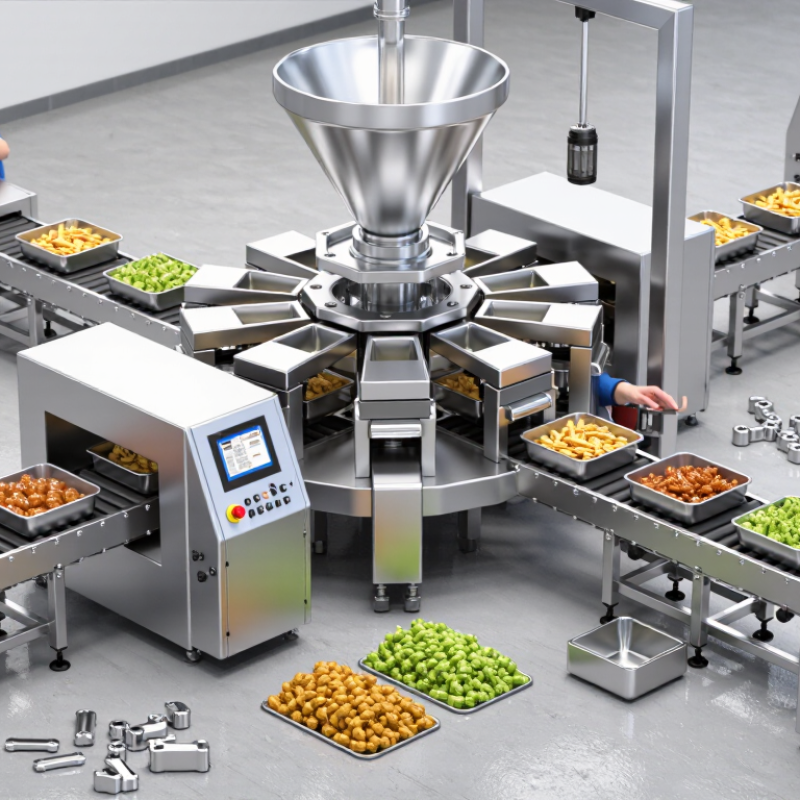
How to Choose a Multihead Weigher Packaging Machine?

Understanding the Operating Principles of a Multihead Weigher

A multihead weigher portions products by weighing several small batches and combining them to approach a target weight. Product drops onto a central dispersal cone, which spreads it toward radial feeding channels. Each channel guides product into a weigh bucket. Small details matter. Uneven flow can leave some buckets full while others remain nearly empty.

Once the buckets register their weights, the control system evaluates possible combinations and selects one close to the set target. Those buckets discharge together into the packaging machine, while other buckets refill for the next cycle.

The process is quick, but not magic.

Product shape, surface texture, and moisture can affect feeding and weighing. A sticky snack may cling to a bucket; fragile pieces may break during handling. Operators should check settings with the actual product and inspect repeatability during production. Even a stable-looking display can hide inconsistent portions. That is worth questioning. Calibration, careful cleaning, and suitable vibration settings help, though real products rarely behave perfectly every day.

Defining Product and Production Requirements

How to Choose a Multihead Weigher Packaging Machine?
Defining Product and Production Requirements

Start with the product, not the machine’s advertised speed. Record each item’s size, shape, bulk density, and flow behavior. Does it pour freely, cling to surfaces, or break when dropped? Small details matter. A sample of actual product can reveal residue, bridging, or uneven feeding that a specification sheet may miss. Also define the target portion weight and acceptable weighing variation, since these affect head configuration and operating settings.

Tips: Run product trials using real batches. Check for buildup in the weigh buckets and confirm performance at your required accuracy. Test it live. Ask how results change with different product sizes or moisture levels; one trial may not represent every production day.

Estimate typical and peak output across shifts, rather than relying only on a machine’s maximum rate. Consider planned growth, available floor space, and the speed of connected filling equipment. Changeovers matter, too. If operators handle several recipes, note how often parts need cleaning and how long product changes take. It is easy to underestimate that time. Revisit your assumptions with production staff, because a technically suitable machine can still slow the line if feeding, cleaning, or pack handling is overlooked.

How to Choose a Multihead Weigher Packaging Machine? - Defining Product and Production Requirements

Product Example Product Characteristics Approx. Bulk Density Example Target Weight Illustrative Line Target Key Weigher Requirements Points to Confirm Before Selection
Potato chips Lightweight, fragile, irregular pieces; breakage and product settling can affect the pack. About 40–100 kg/m³ 100–200 g 30–60 packs/min on a single packaging lane Gentle product transfer, suitable bucket geometry, controlled feed rate, and settings that limit product drop height. Measure product dimensions and breakage sensitivity. Run trials using the actual chip shape, seasoning, and packaging format.
Frozen mixed vegetables Cold, moist pieces with variable shapes; pieces may clump or leave residue. About 450–650 kg/m³ 400–1,000 g 20–45 packs/min on a single packaging lane Food-contact construction suitable for the washdown environment, effective drainage, and feed controls that reduce bridging. Confirm operating temperature, cleaning method, frost or moisture levels, and whether the product contains unusually large pieces.
Whole nuts Free-flowing but size and shape vary; oil content and surface condition can affect movement. About 350–600 kg/m³ 150–500 g 25–50 packs/min on a single packaging lane Consistent distribution to the weigh heads, product-contact surfaces compatible with the cleaning process, and appropriate bucket size. Check the largest nut dimensions, broken-piece proportion, target-weight tolerance, and whether nut fragments need to be excluded.
Gummy candies Soft or sticky pieces may adhere to surfaces, especially in warm or humid conditions. About 500–750 kg/m³ 100–500 g 25–50 packs/min on a single packaging lane Product-contact surfaces and bucket finishes suited to the product, plus controlled feed and a practical cleaning routine. Test at the expected room temperature and humidity. Confirm whether candies are sugar-coated, oily, or likely to stick together.
Dry rice Small, relatively uniform grains with good flow; dust and grain damage may still require attention. About 750–850 kg/m³ 500–2,000 g 25–50 packs/min on a single packaging lane Stable product feed, suitable bucket volume for the largest pack size, and dust management appropriate to the installation. Confirm grain type, fines content, pack-weight range, and the required interface with the bagger or other packaging equipment.
Roasted coffee beans Light, irregular beans that can be fragile and may generate fragments; aroma protection may affect the package system. About 350–500 kg/m³ 250–1,000 g 20–45 packs/min on a single packaging lane Gentle handling, controlled feed, and integration with packaging equipment designed for the selected bag and sealing method. Evaluate bean size, roast level, fragility, dust or chaff, and any requirements for gas flushing or aroma-barrier packaging.
Small hardware parts Rigid pieces may be dense, noisy, and capable of wearing or damaging product-contact components. Varies considerably by part and mixture 100–2,000 g 15–40 packs/min on a single packaging lane Confirm material compatibility, impact and wear considerations, part orientation, and the need for a counting or inspection step. Provide samples and the full part-size range. Check whether weighing is preferable to counting for the required quantity accuracy.
General requirement Define the product and the complete pack format before comparing machine specifications. Measure the actual product; do not rely on a broad category estimate. Specify minimum, nominal, and maximum pack weights. State the required sustained output in good packs per minute, not only the machine’s advertised maximum. Match the weigher, feeder, discharge system, packaging machine, and downstream equipment as one line. Request a product trial and document accuracy, throughput, giveaway, changeover time, cleaning needs, and availability assumptions.

Planning examples only: bulk density and achievable output vary with product size, flow, target weight, bucket configuration, packaging equipment, and operating conditions. Confirm performance with representative product trials and agreed acceptance criteria.

Comparing Weighing Speed, Accuracy, and Capacity

When comparing multihead weighers, separate weighing cycles from finished packs per minute. A machine may perform many combinations, yet product settling, discharge timing, and bagger speed can limit actual output. Ask suppliers to run your product at the target weight. Record saleable packs per minute, giveaway, and rejected packs—not just the headline speed.

Accuracy needs a defined reference. OIML R 61-1, the international recommendation for automatic gravimetric filling instruments, uses classes such as X(1) and X(2); permissible errors depend on factors including fill mass and instrument conditions. Treat these classes as a framework, not a promise that every pack will hit its nominal weight. Small, sticky pieces behave differently from uniform pellets. Test both.

Capacity is practical, not just the number of weigh heads. Check hopper volume, product flow, and refill frequency against your shift plan. A larger machine can still underperform if fragile pieces bridge or crumbs cling to contact surfaces. Run a representative product trial, including startup and changeover. Speed alone misleads. Record the settings and results; I would also repeat the test, because one clean run can flatter a setup.

How to Choose a Multihead Weigher Packaging Machine?

Compare typical configurations by weighing speed, indicative weighing accuracy, and number of heads.

How to read this chart: More heads can provide more combinations to reach a target weight, while speed and accuracy depend on the product, target weight, and operating conditions. Values are illustrative planning benchmarks, not guaranteed specifications; confirm performance with a product trial.

Assessing Packaging Line Compatibility and Hygiene Needs

How to Choose a Multihead Weigher Packaging Machine?

Assessing Packaging Line Compatibility and Hygiene Needs

Check the handoff from the weigher to the bagger before comparing machine speeds. Confirm discharge height, available floor space, conveyor width, and the packer’s timing window. A fast weigher can still slow a line if product backs up at the funnel. Test with your actual product; sticky pieces and fragile snacks behave differently. Small gaps matter.

Hygiene needs depend on the product and cleaning method. For wet washdown, review the machine’s stated protection rating, seals, cable routing, and access to product-contact surfaces. Ask how quickly hoppers and contact parts can be removed, cleaned, and reinstalled. FAO estimated that 14% of food was lost between post-harvest and retail worldwide (The State of Food and Agriculture, 2019). That figure is not specific to packaging lines, but it underscores why reducing spills and rejects deserves attention.

Tips: Run a line trial with production staff present. Record changeover time, product residue, giveaway, and stoppages. Treat the results as a starting point, not a promise; real cleaning routines and product variation can expose issues a factory test misses.

Choosing a Configuration and Verifying Performance

How to Choose a Multihead Weigher Packaging Machine?
Choosing a Configuration and Verifying Performance

Choose the number of weigh heads and feeder layout around the product’s behavior, not the advertised maximum speed. Run trials with your actual product at the target weight and line rate. Record giveaway, rejected packs, and stable output over repeated runs. Sticky pieces may bridge in a hopper; fragile snacks may break when they drop. Small details matter.

OIML R 61-1:2017, the international recommendation for automatic gravimetric filling instruments, defines accuracy classes such as X(0.5) and X(1). Its class factor affects the applicable maximum permissible error. Use the relevant class as a reference, then agree on a measurable acceptance limit with your supplier. Check that test records identify product, target weight, speed, and sample results—not just the best run.

Verify performance across realistic shifts. Test at minimum and maximum planned speeds, and include product changes or replenishment pauses. Weigh samples independently; compare actual pack weights with the machine’s displayed data. I would also inspect whether operators can clear a blocked chute without disrupting the whole line. One weakness in many trials is too little test time. A short demo can miss drift, uneven product flow, or inconsistent results after cleaning.

FAQS

How does a multihead weigher reach a target weight?

Product spreads across radial channels into weigh buckets. The control system compares combinations and releases a close match. Not magic.

What happens after selected buckets discharge?

Selected buckets empty into the packaging machine while others refill. Timing matters; a slow handoff can interrupt the line.

Why can portions vary?

Shape, surface texture, and moisture affect how product moves. Sticky pieces may cling to buckets; fragile pieces may break. A steady display can still hide uneven portions.

How can I check whether the weigher fits my packaging line?

Measure discharge height, floor space, conveyor width, and the packer’s timing window. Test with your actual product. Small gaps matter.

What should I check for wet cleaning?

Review the stated protection rating, seals, cable routing, and access to product-contact surfaces. Check how easily hoppers come off and go back on.

Why run a production trial?

Real products may behave differently from test samples. Include production staff and record changeover time, residue, giveaway, and stoppages. Treat results as a starting point.

Which settings and maintenance checks can help?

Calibration, careful cleaning, and suitable vibration settings can support consistent weighing. Inspect repeatability during production. Settings may need another look.

Does a faster weigher always make the line faster?

No. Product can back up at the funnel if the handoff or packer timing is unsuitable. That assumption deserves a second look.

Conclusion

Choosing a Multihead Weigher Packaging Machine starts with understanding how multiple weighing heads work together to measure portions efficiently. Before selecting a system, define the product’s characteristics, such as its size, shape, flow behavior, and fragility, along with the required package sizes and production volume. These details help narrow down a configuration that can handle the product consistently without unnecessary complexity.

Next, compare the machine’s weighing speed, accuracy, and capacity against your production targets, and consider how it will connect with existing filling and packaging equipment. Hygiene requirements, cleaning access, and the materials used in product-contact areas are also important, particularly when frequent changeovers or washdowns are needed. Finally, assess the available configurations and verify performance under realistic operating conditions. A practical trial can help confirm that the machine meets accuracy and throughput expectations while fitting the needs of the full packaging line.

Olivia

Olivia

Olivia is a dedicated marketing professional with a profound expertise in our company’s innovative products and services. With a keen eye for detail and a passion for sharing knowledge, she frequently updates our professional blog, providing valuable insights that keep our clients and partners......