
Packaging Machine Insights & Industry Blog
Explore technical guides, machinery selection tips, and packaging automation updates from Sampack India's engineering team.
7 Tips for Choosing a Vertical Form Fill Seal VFFS Machine
Table of Contents
- Understanding VFFS Machine Functions and Packaging Applications
- Matching Machine Design to Product and Packaging Material
- Evaluating Filling Accuracy, Production Speed, and Automation
- Checking Sealing Quality, Sanitation, and Operator Safety
- Comparing Costs, Maintenance Needs, and Supplier Support
- FAQS
- Conclusion
- Related Posts
Choosing a Vertical Form Fill Seal VFFS Machine can shape your packaging efficiency, product quality, and long-term operating costs. The right equipment should match your product, packaging material, production speed, and available floor space. A powder behaves differently from granules, liquids, or fragile snacks. Small details matter, including seal temperature, film tracking, dosing accuracy, and cleaning access.
This guide presents seven practical tips for evaluating a VFFS machine with greater confidence. It considers real production conditions, not only attractive brochure specifications. Check sample runs with your actual product and film whenever possible. Watch the machine form each bag, fill it, seal it, and discharge it. Record changeover time, waste levels, noise, and operator effort. Ask manufacturers for clear performance data, maintenance requirements, training support, and spare-parts availability. Reliable suppliers should explain limitations instead of promising perfect results.
No machine fits every line.
A useful decision also includes future needs. Your current output may increase, or your product range may expand. Modular dosing systems, adjustable bag dimensions, recipe storage, and accessible controls can provide valuable flexibility. However, extra features may increase purchase and maintenance costs. Be realistic. A sophisticated machine is not automatically the most suitable choice.
Before approving a purchase, involve operators, maintenance staff, quality personnel, and production managers. Their practical observations often reveal problems missed during demonstrations. Even experienced buyers can overlook film compatibility or cleaning time. Careful comparison, documented testing, and honest reflection can help you select equipment that performs consistently in daily production.
Understanding VFFS Machine Functions and Packaging Applications
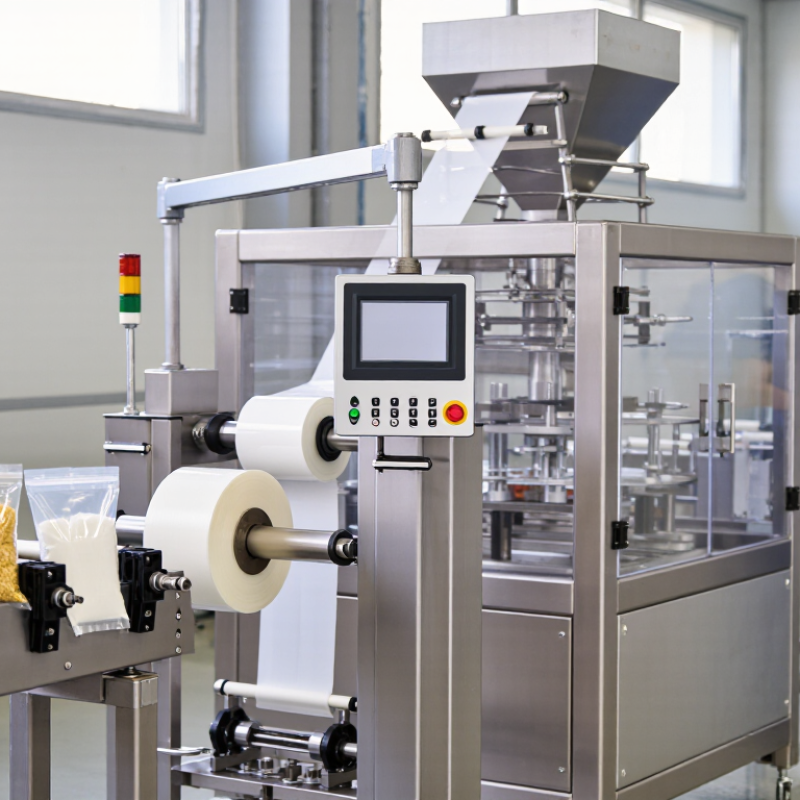
A vertical form fill seal (VFFS) machine forms bags, fills products, and seals packages in one continuous process. It pulls flat film from a roll and guides it around a forming collar. The filling system then measures each portion before the sealing jaws close. Understanding these functions helps match equipment to real packaging needs. Powders, granules, snacks, liquids, and small solids behave differently. Different products demand different controls.
When choosing a VFFS machine, check the filler before focusing on speed. A weigh filler can handle many free-flowing granules, while an auger system offers better control for powders. Pump fillers suit liquids but require careful control of dripping and sealing surfaces.
Confirm the film range, bag dimensions, sealing temperature, and changeover time. Small details matter. Real output is often lower than the advertised maximum. Dust, product settling, and film adjustments can reduce production speed. That gap deserves honest testing.
Request a trial using your actual product and packaging film. Observe bridging, static, leakage, crushed contents, and uneven seals. Measure it. Ask how operators clean contact areas and access the forming tube. For food or medical packaging, hygienic design and documented checks are especially important. Sensors should detect film tracking errors, empty fills, and open seals. Controls must also provide clear fault messages, not confusing codes. A machine that runs quickly but creates frequent rejects may cost more than a slower, stable system. I would still challenge every test result, because laboratory conditions rarely resemble a busy production floor.
Matching Machine Design to Product and Packaging Material
7 Tips for Choosing a Vertical Form Fill Seal VFFS Machine
Matching Machine Design to Product and Packaging Material
A VFFS machine should fit the product before it fits the factory floor. Start with flow behavior. Free-flowing rice needs different dosing from sticky granules or fragile snacks. Check bulk density, particle size, moisture, and dust generation. A practical test should measure target weight, speed, and product damage. Small details matter. Uneven feeding can create weak seals and costly giveaway.
Consider seven design points: product flow, dosing accuracy, bag size, sealing temperature, film stiffness, line speed, and cleaning access. UNEP’s Food Waste Index Report 2024 estimated 1.05 billion tonnes of food waste in 2022. Reliable filling and sealing can help prevent avoidable losses. However, faster is not always better. A slower trial may reveal bridging, powder leakage, or crushed pieces. My own preference is to test the worst product condition, not the easiest sample.
Film selection requires equal care. Laminated structures may protect sensitive products, while recyclable mono-material films can require tighter temperature control. Smithers’ 2024 flexible-packaging forecast places the global market above 300 billion dollars by 2028, driven partly by convenience and material development. Ask for actual film samples, not only specifications. Measure seal strength after storage, vibration, and temperature changes. A machine that runs perfectly for ten minutes may fail during an overnight shift. Leave room for adjustment. Real production is rarely as clean as the demonstration.
Typical VFFS Film Sealing Temperature Ranges
Use the packaging material’s sealing window to guide jaw design, temperature control, and machine settings.
These are typical starting ranges for commonly used heat-sealable films: polyethylene, polypropylene, polyester/polyethylene laminates, and paper/polyethylene laminates. Actual settings depend on film structure, thickness, line speed, dwell time, pressure, and product contamination. Validate the sealing window with the selected material before production.
Evaluating Filling Accuracy, Production Speed, and Automation
7 Tips for Choosing a Vertical Form Fill Seal VFFS Machine
Evaluating filling accuracy, production speed, and automation should guide your VFFS machine selection. A fast machine is not useful if every bag contains inconsistent weight. Check the dosing system, load-cell response, and sealing stability with your actual product. Tip 1: Request test runs using your material. Powders, granules, and fragile pieces behave differently. Tip 2: Measure accuracy across several production cycles, not just one sample.
Production speed requires practical measurement. Ask for confirmed output at your target bag size, film type, and filling weight. Tip 3: Compare stable operating speed, not the highest advertised number. Tip 4: Inspect changeover time. A machine that loses an hour between products may reduce daily output considerably. I have seen speed targets look impressive on paper, yet frequent adjustments weakened real performance.
Automation can improve consistency, but excessive complexity may create new problems. Tip 5: Look for automatic film tracking, fault detection, and recipe storage. Tip 6: Check whether operators can understand the interface quickly. Training matters. Tip 7: Examine access to sensors, belts, and sealing parts during cleaning and maintenance. Reliable automation should reduce mistakes without hiding useful controls. Leave room for doubt. A short trial with operators often reveals issues that specifications miss.
7 Tips for Choosing a Vertical Form Fill Seal VFFS Machine - Evaluating Filling Accuracy, Production Speed, and Automation
| Tip | Evaluation Dimension | Typical Technical Benchmark | What to Verify Before Purchase |
|---|---|---|---|
| 1. Match the Filling System to the Product | Filler type and product characteristics | Auger fillers are commonly used for powders; volumetric cup fillers suit free-flowing granules; multihead weighers are commonly selected for irregular or mixed products; pump fillers are used for liquids and pastes. | Confirm bulk density, particle size, moisture, flowability, viscosity, product fragility, target weight, and whether the product bridges, compacts, or generates dust. |
| 2. Prioritize Filling Accuracy | Weight control and giveaway | A practical target for many automated weighing applications is approximately ±0.5% to ±1.0% of the programmed target weight, although actual performance depends on the product and package size. | Request test results from representative product samples. Check load-cell resolution, feedback control, calibration procedures, reject handling, and statistical weight reports. |
| 3. Compare Production Speed Realistically | Output rate and operating efficiency | Typical VFFS output may range from about 20 to 120 bags per minute, while some high-speed configurations can exceed this range. Actual output is limited by product flow, bag size, sealing time, and the selected filler. | Compare guaranteed speed using the exact product, film, bag dimensions, target weight, and seal requirements. Also evaluate changeover time, stoppages, and overall equipment effectiveness rather than rated speed alone. |
| 4. Evaluate Film and Seal Performance | Film compatibility, seal quality, and packaging range | Common VFFS systems process heat-sealable laminated or polyethylene-based films. Maximum bag width and length are determined by the forming tube, sealing jaws, and machine configuration. | Test the intended film structure, sealant layer, thickness, coefficient of friction, print registration, seal temperature, dwell time, and leak resistance. Confirm the complete range of bag sizes required. |
| 5. Measure the Level of Automation | Controls, sensors, and integration | Useful automation features include PLC and HMI control, automatic weight feedback, film-end detection, registration-mark sensing, no-product/no-bag logic, temperature monitoring, and alarm diagnostics. | Check recipe storage, remote access, data export, line communication protocols, integration with scales or metal detectors, cybersecurity controls, and the availability of replacement components. |
| 6. Reduce Changeover and Cleaning Time | Product changeover, sanitation, and maintenance | Changeover time varies significantly by bag size, filler design, tooling, and operator experience. Tool-less adjustments, quick-release parts, recipe-based settings, and accessible product-contact areas can reduce downtime. | Time a complete changeover with trained operators. Inspect cleanability, hygienic design, dust extraction, washdown limitations, spare-parts access, preventive-maintenance requirements, and lubrication points. |
| 7. Calculate Total Cost of Ownership | Energy, labor, waste, service, and lifecycle cost | The purchase price is only one cost component. Film waste, product giveaway, compressed-air demand, electricity consumption, labor, unplanned downtime, maintenance, and spare parts can materially affect the cost per saleable bag. | Request utility requirements, service intervals, warranty terms, training scope, expected parts availability, commissioning support, and a cost-per-bag estimate based on the planned production schedule. |
Note: Performance ranges are representative industry benchmarks, not guarantees. Final results depend on product properties, package size, film construction, machine configuration, operator skill, and operating conditions.
Checking Sealing Quality, Sanitation, and Operator Safety
7 Tips for Choosing a Vertical Form Fill Seal VFFS Machine
Checking Sealing Quality, Sanitation, and Operator Safety
Sealing Quality
A reliable VFFS machine should produce seals that remain tight during transport and storage. Inspect sample packs for wrinkles, channels, burnt edges, and uneven pressure. Small defects can become costly leaks. Ask for documented seal-strength tests under different film types and temperatures. A practical trial should include real product, not only empty film. Operators should examine several hundred packages, because early results may look misleadingly perfect.
Sanitation
Sanitation needs close attention. Look for smooth, corrosion-resistant surfaces, sloped areas, and minimal product traps. Tool-less access can shorten cleaning time, especially around forming tubes and sealing jaws. Powder may settle behind covers, while sticky products can collect beneath guides. The design should support the site’s approved cleaning method. Dry cleaning is not automatically safer. It depends on the material, residue, and contamination risk.
Operator Safety
Operator safety is equally important. Guards, interlocks, emergency stops, and clear access points should be tested during acceptance. Controls must remain readable beside moving film and heated sealing parts. Check lifting height and refill tasks, too. Poor ergonomics can cause mistakes before anyone notices. No machine is perfect. A clean frame may still hide awkward maintenance points. Have operators review the machine during a live trial, then record every concern instead of dismissing minor inconveniences.
Comparing Costs, Maintenance Needs, and Supplier Support
7 Tips for Choosing a Vertical Form Fill Seal VFFS Machine
A low purchase price can hide expensive operating needs. Compare the total cost over three to five years, including tooling, film waste, electricity, compressed air, training, and spare parts. Ask suppliers for test data using your actual product and packaging film. Laboratory results may look better than factory performance. Check the expected output after sealing temperature changes and product refills. Small details matter.
Maintenance should be measured in minutes, not promises. Examine the sealing jaws, forming tube, sensors, and film path during a factory visit. Are they easy to clean and replace? Request a preventive maintenance schedule with daily, weekly, and monthly tasks. Confirm the price and delivery time for critical parts. Keep practical spares nearby. Theoretical uptime is often optimistic, especially during frequent size changes. Ask for documented downtime records, but treat them carefully.
Supplier support can protect production more than an attractive discount. Confirm remote troubleshooting hours, technician response times, installation training, and warranty coverage. Request clear acceptance criteria for factory and site testing. Manuals should include wiring diagrams, fault codes, and maintenance procedures. Speak with two current users about response quality, not just machine speed. Put service commitments, spare-part availability, and software support in the contract. One weakness remains: no supplier can predict every product variation. Test difficult materials before approval.
FAQS
Start with flow behavior, not floor space. Free-flowing rice needs different dosing from sticky granules. Fragile snacks require gentler handling. Check density, particle size, moisture, and dust. The easiest sample may hide problems.
Test the actual product at the target weight and speed. Measure filling accuracy, seal quality, and product damage. Try difficult conditions, including moisture or irregular particles. A short demonstration can mislead.
Measure several production cycles, not one attractive sample. Check dosing performance and load-cell response. Watch for uneven feeding, giveaway, and weak seals. Small errors become expensive over long shifts.
Compare stable output at the real bag size, film type, and filling weight. Ignore the highest advertised speed alone. A slower machine may perform better overall. Frequent adjustments can quietly reduce daily production.
Film stiffness and sealing temperature strongly affect results. Laminated films may protect sensitive products. Recyclable mono-material films may need tighter temperature control. Request real film samples, not specifications only.
Test seal strength after storage, vibration, and temperature changes. Inspect seals after an overnight production run. Ten perfect minutes prove very little. Real production is messier.
Automatic film tracking, fault detection, and recipe storage can improve consistency. The interface should be clear to operators. Excessive complexity may create new problems. Helpful automation should not hide essential controls.
Inspect access to sensors, belts, and sealing parts. Difficult access increases cleaning time and missed defects. Check changeover time between products. One lost hour can weaken the entire schedule.
Not always. High speed may cause bridging, powder leakage, or crushed pieces. Reliable filling and sealing can prevent avoidable losses. I would question any speed target without longer testing.
Conclusion
Choosing the right Vertical Form Fill Seal VFFS Machine begins with understanding its functions and the packaging applications it must support. Consider the product’s characteristics, such as powder, granules, liquid, or solid pieces, along with the packaging material, bag size, and required format. The machine should provide reliable filling accuracy, suitable production speed, and an automation level that matches your operating needs and workforce. Flexible settings can also help accommodate future product or packaging changes.
Sealing performance, sanitation, and operator safety are equally important. Look for a design that creates consistent, secure seals, allows easy cleaning, and includes practical safeguards for daily operation. Beyond the initial purchase price, evaluate energy use, maintenance requirements, spare-part availability, and the quality of technical support. A well-matched machine can reduce waste, improve productivity, simplify routine maintenance, and deliver dependable packaging results over the long term.

Blog Tags: