In many small and medium-sized production facilities, accurate filling begins with a practical balance between automation and human control. A Semi Automatic Weighing Filling Machine measures a product by weight, then releases a prepared quantity into a bag, jar, pouch, or container. The operator usually places the container beneath the filling nozzle and starts the cycle. This arrangement suits powders, granules, seeds, snacks, feed, and other free-flowing materials.
The machine typically includes a weighing hopper, load cells, a control panel, a discharge gate, and adjustable filling settings. Load cells detect the product’s weight, while the controller stops feeding near the selected target. Some models use fast and slow feeding stages to improve accuracy. On a factory floor, this may reduce spilled material around the weighing station and create more consistent packs. It also gives operators clearer control over unusual products.
However, it is not a perfect solution. Product moisture, particle shape, vibration, and operator timing can influence results. A machine may perform differently when powder bridges inside the hopper. Real testing matters. Experienced suppliers should check sample materials, target weights, production speed, cleaning requirements, and calibration procedures before recommending equipment. Reliable operation also depends on routine inspection and correctly maintained load cells. This guide explains how a Semi Automatic Weighing Filling Machine works, where it fits, and what users should examine before purchase. Some assumptions may fail in practice, so careful trials remain essential.
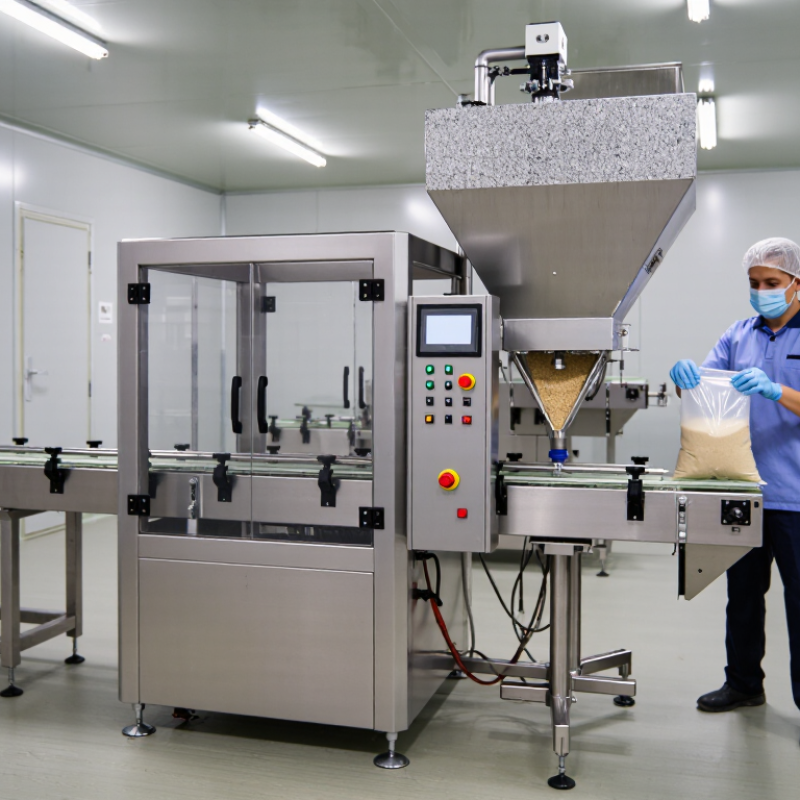
What Is a Semi Automatic Weighing Filling Machine?
A semi automatic weighing filling machine measures a product by weight and releases it into a container. Unlike a fully automatic system, it needs an operator for several steps. The operator places an empty bag, pouch, or container beneath the filling outlet. Then, the machine starts a programmed weighing cycle.
Inside the equipment, load cells detect the product’s weight with high sensitivity. A controller compares the measured weight with the target value. The feeding gate slows near the set point, helping reduce overfilling. This design works well for powders, granules, seeds, powders, and other dry materials. However, product flow can change with humidity, particle size, or material density.
In daily production, operators quickly notice the value of stable weighing. A clear display shows the target, actual weight, and filling status. Short adjustment times can improve output without requiring a complex production line. It is not fully automatic. Staff still need to position containers, inspect filled packages, and remove them safely. Regular calibration matters, especially when accuracy affects inventory or packaging quality. Dust around the load cells may also cause unstable readings. In practice, results are rarely perfect. A careful operator can correct small errors before they become repeated waste. The machine becomes most useful when its settings match the material, container size, and working rhythm.
How Does a Semi Automatic Weighing Filling Machine Work?
What Is a Semi Automatic Weighing Filling Machine?
How Does a Semi Automatic Weighing Filling Machine Work?
A semi automatic weighing filling machine measures a product by weight before releasing it into a container. The operator places an empty bag, pouch, or tub beneath the filling nozzle. A load cell detects the container’s tare weight, then the control system begins dosing from the hopper. Coarse feeding moves quickly, while fine feeding slows near the target weight. This two-stage process helps reduce overfilling and product waste.
When the measured weight reaches the preset value, the gate closes. The filled container is then removed manually, and the next container is positioned. The display may show target weight, actual weight, tolerance, and production counts. Practical tests should include dusty powders, uneven granules, and different container shapes. Real materials rarely behave perfectly.
The process follows principles described in OIML R 61 for automatic gravimetric filling instruments. NIST Handbook 44 also emphasizes scale accuracy, repeatability, and suitable verification procedures. PMMI’s 2024 State of the Industry report identifies labor availability and flexible automation as continuing packaging concerns. That explains the appeal of semi automatic equipment: it reduces repetitive dosing work without removing every operator decision. However, output depends on product flow, operator rhythm, and cleaning time. A machine can be accurate in a factory trial, yet less consistent during a busy shift. Calibration records, sample checks, and stable floor conditions remain essential. Accuracy is not automatic.
What Materials Can It Weigh and Fill?
What Is a Semi Automatic Weighing Filling Machine?
A semi automatic weighing filling machine measures a target quantity, then dispenses it into a bag or container. An operator usually places the package, starts the cycle, and removes the filled unit. The machine is especially useful when production volume is moderate, packaging formats change often, or full automation is too costly.
What Materials Can It Weigh and Fill?
It can handle many dry materials. Common examples include rice, flour, sugar, coffee beans, grains, seeds, nuts, pet food, powdered drink mixes, detergent, and small plastic parts. Free-flowing products usually move through a vibratory feeder. Fine powders often need an auger because dust and clumping affect flow. Moist products are more difficult. They may stick inside the hopper or form uneven portions.
Material behavior matters more than appearance. A one-kilogram bag of sugar may flow smoothly, while flour needs slower dosing and dust control. Operators should test bulk density, particle size, moisture, and flow rate before selecting the machine. The United Nations Environment Programme reported that 1.05 billion tonnes of food were wasted in 2022. Better portion control can help reduce avoidable filling losses, although machines are not a complete solution.
Accuracy is not automatic. Load-cell calibration, clean contact surfaces, and stable flooring all matter. Some operators discover this late. A dusty workshop can produce inconsistent readings, even with reliable equipment. Semi automatic systems still require trained handling, careful checks, and realistic production trials.
A semi-automatic weighing filling machine can measure and fill many dry products, including powders, granules, seeds, and food ingredients. The materials below are compared by typical bulk density, which helps determine hopper capacity, filling speed, and the suitable dosing system. Actual density varies with moisture, particle size, and compaction.
What Are Its Main Components and Features?
A semi-automatic weighing filling machine measures a product by weight, then releases a controlled portion into a container. In daily production, an operator usually places each container beneath the discharge outlet. The machine handles the weighing cycle, while people manage loading, inspection, and container movement. This arrangement suits powders, granules, and other free-flowing materials.
Its core component is a load cell beneath the weighing hopper. The sensor converts product weight into an electrical signal for the controller. A feed hopper holds material, while a vibrating tray, screw, or gravity gate regulates flow. The controller often uses coarse and fine feeding to approach the target weight. A pneumatic or motorized outlet gate opens and closes at the programmed point. A foot switch can start filling without using both hands. That helps at a busy packing table.
Useful features include tare adjustment, target-weight settings, recipe storage, and overfill alarms. Many machines provide digital displays for weight, count, and operating status. Product-contact parts should be removable for cleaning and inspection. Calibration remains essential. Dust, vibration, uneven containers, and material flow can affect accuracy. It is not flawless. Operators may need to adjust feeding speed after observing real production behavior. A stable frame, clear controls, and accessible sensors also improve reliability during repeated filling work.
How Do You Choose and Operate the Right Machine?
What Is a Semi Automatic Weighing Filling Machine?
Choosing the right semi automatic weighing filling machine starts with the product, not the advertised speed. Powder, granules, and fragile pieces flow differently. Check the target weight, container size, material density, and required accuracy. A load cell with stable readings matters more than a bright control panel. The hopper should hold enough product for steady filling without causing unnecessary pressure. Consider stainless steel contact parts, tool-free cleaning, and easy access to the weighing area. These details save time during real production.
During operation, place the machine on a firm, level surface. Clean the hopper and confirm that the discharge gate moves freely. Enter the target weight, then tare an empty container. Run several test fills before normal work begins. Weigh the samples on a verified external scale. Small differences may reveal vibration, uneven feeding, or material bridging. Adjust the feed speed carefully. Faster is not always better.
Operators should record test weights and inspect the first filled containers from each batch. Keep hands clear of moving parts. Follow the equipment manual and site safety procedures. In practical trials, operators sometimes trust the screen too quickly. That is a mistake worth reconsidering. Temperature, dust, and changing product density can affect results. A machine may perform well in the morning and drift later. Regular calibration, cleaning, and honest process records help keep filling consistent.
FAQS
It weighs a product and releases the selected amount into a bag, pouch, or container. An operator starts and monitors each cycle.
It can fill rice, flour, sugar, coffee beans, grains, seeds, nuts, pet food, and detergent. Dry materials usually work best.
Load cells detect the product’s weight. A controller compares the measured weight with the target value.
Yes. The operator places an empty container, begins the cycle, and removes the filled package. It still needs people.
Dust, vibration, humidity, particle size, and material density can change results. Uneven feeding may also cause small weight differences.
Enter the target weight and tare an empty container. Run several test fills, then check them with a verified external scale.
No. Excessive speed may cause overfilling or unstable readings. Slower feeding near the target often improves control.
Calibrate the load cells regularly and clean the hopper and contact surfaces. Keep the machine level and inspect filled packages.
Keep hands away from moving parts and use a firm, level surface. Follow the equipment manual and workplace safety procedures.
It suits moderate production and changing package sizes. It may not fit high-speed operations requiring continuous automatic handling. Speed can mislead.
Conclusion
A Semi Automatic Weighing Filling Machine is a practical packaging solution that combines accurate weighing with controlled product filling. It is designed for operations that need better consistency and efficiency than manual packaging while still allowing an operator to load containers, start the filling cycle, and make adjustments when needed. The machine typically works by feeding material into a weighing hopper, measuring the target quantity, and releasing the weighed product into a bag, pouch, or container.
This equipment can handle many dry, free-flowing materials, including grains, powders, pellets, seeds, and other safe industrial or food-grade products, depending on its configuration. Its main components may include a hopper, weighing sensor, control panel, discharge gate, and supporting frame. Important features include adjustable filling weights, stable measurement, simple operation, and easy cleaning. Choosing the right model requires considering the product type, target weight range, container style, required output, and available workspace. Proper calibration, regular inspection, and correct operating procedures help maintain reliable performance.