
Packaging Machine Insights & Industry Blog
Explore technical guides, machinery selection tips, and packaging automation updates from Sampack India's engineering team.
Why Choose a Mini FFS Pouch Packing Machine?
Choosing the right packing equipment can shape daily production, product protection, and operating costs. A Mini FFS Pouch Packing Machine forms, fills, and seals pouches within one compact system. It can fit beside a worktable, near a weighing unit, or inside a small production room. That physical detail matters when floor space is limited.
Dr. J. Singh, a packaging machinery specialist, offers a practical view: “A good package protects the product, controls the process, and reduces waste.” This principle explains the appeal of mini FFS equipment. The machine can create consistent pouch dimensions, controlled fill volumes, and reliable heat seals. Operators may also change film rolls, adjust settings, and inspect finished pouches without managing a large production line. Less complexity helps.
However, compact does not mean universally suitable. A Mini FFS Pouch Packing Machine may have lower output than a full-scale industrial system. Product flow, film thickness, pouch size, and sealing temperature still require careful testing. Weak material selection can cause wrinkles, leaks, or uneven seals. That part is easy to underestimate.
A well-matched machine can reduce manual handling and improve workplace organization. It may support growing businesses, pilot production, specialty foods, powders, and selected granular products. Cleaning access matters too. So does technical support.
The best choice is rarely the smallest machine. It is the machine that fits the product, operator skill, output target, and future plans. Sometimes, a little more capacity is wiser.
What Is a Mini FFS Pouch Packing Machine?
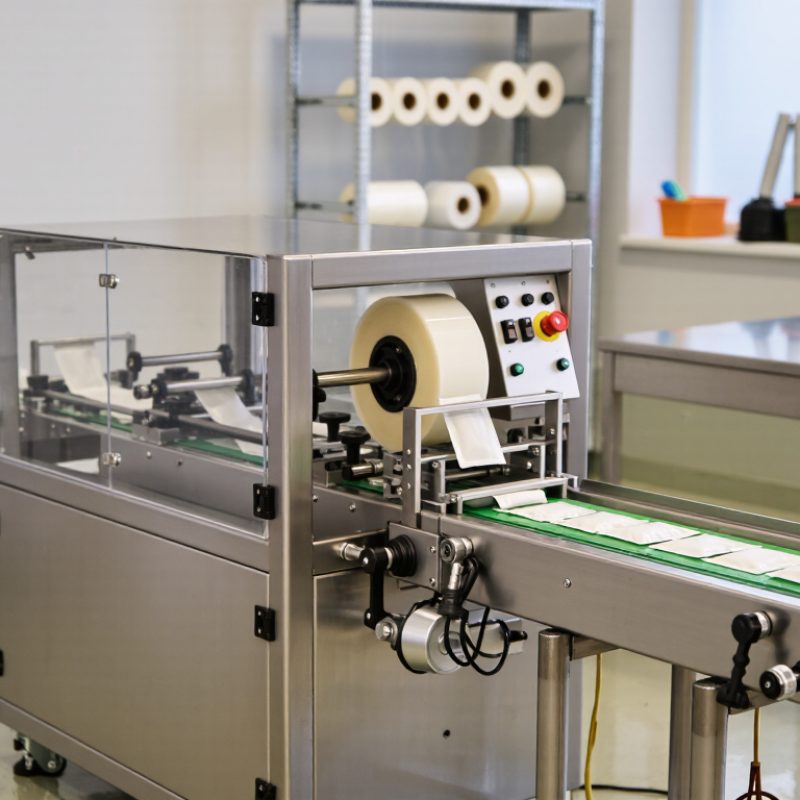
A mini FFS pouch packing machine creates, fills, and seals pouches within one compact system. FFS means form-fill-seal. The machine draws roll film, shapes it around a forming collar, doses the product, and seals the package. It can also print batch details and cut individual pouches. This integrated process reduces manual handling and keeps the filling area more consistent.
The word “mini” can mislead. It usually describes a smaller footprint, simpler configuration, or lower output, not one universal machine standard. According to PMMI’s 2023 State of the Industry report, U.S. packaging machinery shipments reached about 10.2 billion dollars in 2022. That growth reflects continued interest in automation, even among smaller operations. A mini machine suits pilot production, seasonal products, limited floor space, and frequent format changes. It may deliver practical control where a full-size line would create unnecessary capacity.
Flexible packaging demand also supports this equipment choice. The Flexible Packaging Association reported U.S. flexible packaging sales of approximately 39.5 billion dollars in 2022. Film waste, sealing temperature, dosing accuracy, and changeover time still require careful evaluation. A smaller frame does not guarantee lower energy use. In real production, operators must test powder flow, liquid viscosity, pouch width, and seal strength. Sometimes, the “best” compact machine needs slower operation. That can be disappointing, but stable seals matter more than impressive speed. Metrics from the first production trials should guide the final specification.
How Does a Mini FFS Pouch Packing Machine Work?
Why Choose a Mini FFS Pouch Packing Machine?
How Does a Mini FFS Pouch Packing Machine Work?
A mini FFS pouch packing machine forms, fills, and seals each pouch from one film roll. The process begins when the film unwinds through guide rollers. A forming collar bends it into a tube. A vertical sealer closes the back seam. Then, a dosing system releases the measured product. Horizontal jaws seal the top and bottom before a cutter separates the pouch.
The sequence is compact, but accuracy matters. Sensors track film position, temperature, and sealing pressure. If the film drifts slightly, the machine may create weak seals or uneven pouches. Operators usually adjust timing for product flow, film thickness, and pouch size. It is not magic. Small machines still need careful setup and regular cleaning.
Grand View Research valued the global pouch packaging market at about USD 46 billion in 2023. Its report also projects continued growth through 2030. This demand reflects flexible packaging’s low material use and convenient format. PMMI industry research identifies labor availability and automation as important packaging concerns. A mini FFS system can address both needs in limited production spaces.
However, compact equipment is not automatically better. Shorter film paths may simplify operation, yet they can reduce adjustment tolerance. In practical testing, I would check seal strength, fill-weight variation, and changeover time. These details reveal more than a polished product sample.
Why Choose a Mini FFS Pouch Packing Machine? - How Does a Mini FFS Pouch Packing Machine Work?
| Data Dimension | Typical Mini FFS Specification or Result | How It Works or Why It Matters | Practical Consideration |
|---|---|---|---|
| Machine format | Vertical form-fill-seal (VFFS) system | The machine forms a flat roll of film into a tube, fills the tube, and seals the package in one continuous process. | A compact design is suitable where floor space and production volume are limited. |
| Typical output range | Approximately 15–40 pouches per minute, depending on product, pouch size, and dosing method | Each machine cycle generally includes film movement, filling, sealing, and cutting. | Actual output should be confirmed through testing because sticky, fragile, or irregular products can reduce speed. |
| Common pouch styles | Three-side seal, pillow pouch, and gusseted pouch | A forming collar shapes the film, while heated sealing jaws create the longitudinal and transverse seals. | The selected film width and forming set determine the available pouch dimensions. |
| Typical pouch width | About 50–150 mm for many small-format applications | A film sensor and registration system help maintain the intended seal and cut position. | The usable range varies with the forming tube, sealing jaw size, and product volume. |
| Typical pouch length | About 70–200 mm in many mini-machine configurations | A programmable controller adjusts film-feed length or uses printed registration marks to control cutting. | Longer pouches may reduce cycles per minute because more film must be indexed during each cycle. |
| Suitable product types | Granules, powders, small solid pieces, and selected liquids or pastes | The filling unit is matched to the material, such as an auger for powder, volumetric cup for granules, or pump for liquids. | One dosing system cannot accurately handle every product, so product flow and bulk density must be evaluated. |
| Filling accuracy | Commonly around ±1% to ±3% for free-flowing products when properly calibrated | The dosing mechanism measures a target volume, weight, or pump stroke before releasing the product into the formed pouch. | Accuracy depends on product consistency, calibration, dosing technology, and operator settings. |
| Film materials | Heat-sealable laminated films, polyethylene-based films, and other application-approved flexible films | Film is unwound, guided through the forming section, then sealed by controlled heat, pressure, and dwell time. | Film thickness, seal layer, coefficient of friction, and barrier requirements affect machine performance. |
| Sealing temperature control | Typically adjustable within approximately 100–200°C, depending on the film structure | Temperature controllers and sensors maintain the heat required to bond the film layers. | The correct setting must follow the film supplier’s sealing window; excessive heat can damage or distort the film. |
| Control method | PLC or microprocessor control with a touchscreen interface on many current models | The controller synchronizes film feeding, dosing, sealing, cutting, temperature monitoring, and fault alarms. | Stored settings can shorten changeovers when the same products and pouch formats are repeated. |
| Film registration | Optional or standard photoelectric mark tracking for pre-printed film | An optical sensor detects registration marks and adjusts film movement so graphics align with the cut. | Mark contrast, film transparency, and print consistency influence tracking reliability. |
| Typical machine footprint | Often approximately 800–1,200 mm wide and 900–1,500 mm deep, excluding auxiliary equipment | The vertical layout combines film forming, filling, sealing, and discharge in a relatively small area. | Allow additional clearance for film loading, cleaning, maintenance, and product feeding. |
| Electrical supply | Commonly single-phase or three-phase power; many compact units use roughly 1.5–4 kW installed power | Electric heaters, motors, sensors, and controls operate together to complete each packaging cycle. | The exact voltage, frequency, and power requirement must be checked before installation. |
| Compressed air requirement | Some configurations require approximately 0.4–0.6 MPa clean, dry compressed air | Pneumatic cylinders may operate sealing jaws, cutters, gates, or product-contact valves. | Air consumption depends on the pneumatic components and cycle rate; filtration and moisture control are important. |
| Main operating sequence | Unwind → form → fill → seal → cut → discharge | The synchronized sequence converts roll stock into individual filled pouches without manually forming each package. | Correct timing between filling and sealing helps prevent product trapped in the seal area. |
| Changeover time | Often about 20–60 minutes for a basic size or product change, depending on tooling and cleaning requirements | Operators replace or adjust forming and dosing parts, load the new film, and update control parameters. | Quick-change parts and tool-free adjustments can reduce downtime, but sanitation needs may extend the process. |
| Why choose a mini FFS machine? | Lower space demand, lower initial investment, flexible batch production, and reduced manual handling | The integrated process automates several packaging tasks in one compact unit. | It is best suited to small and medium production requirements rather than very high-volume lines. |
| Key selection criteria | Product characteristics, target fill weight, pouch dimensions, film type, output target, and cleaning requirements | These factors determine the correct dosing system, forming set, sealing configuration, and control functions. | A sample-product test is recommended before purchase to verify accuracy, seal quality, speed, and material compatibility. |
Note: The figures shown are typical industry ranges for compact vertical FFS systems. Exact performance depends on machine configuration, packaging material, product properties, pouch size, and operating conditions.
What Products Can It Pack Efficiently?
A mini FFS pouch packing machine is useful when products need clean, consistent, and compact packaging. Its strongest advantage is flexibility across common product types. It can efficiently pack powders such as flour, spices, drink mixes, and nutritional blends. Granules, including rice, seeds, sugar, and small snacks, also flow well when their size is reasonably uniform. Some models handle liquids and pastes, such as sauces, creams, and detergents, with suitable filling systems.
The machine can also package coffee, pet food, dried fruit, and other lightweight products. However, product behavior matters more than the product name. Sticky powders may bridge inside the hopper. Uneven granules can reduce filling accuracy. Liquids require careful control to prevent dripping around the seal. In practical testing, checking seal strength, pouch appearance, and actual fill weight is essential. A perfect fit is not guaranteed. Small mistakes can become costly waste.
Tips: Test the real product before purchase. Check its moisture, particle size, flowability, and temperature. Run several pouch sizes, not just one. Keep a sample log with speed, weight, and sealing results. Operators should inspect the machine regularly, especially forming collars and sealing jaws. This simple habit often prevents larger problems. Also, leave room for adjustment; production conditions rarely remain identical throughout the day.
What Are Its Main Advantages for Small-Scale Production?
Why Choose a Mini FFS Pouch Packing Machine?
For small-scale production, a mini FFS pouch packing machine can reduce manual filling and sealing work. Its compact frame fits beside a preparation table, leaving more room for storage and movement. The machine forms pouches, fills measured product, and seals each pack in one controlled cycle. This supports cleaner handling and more consistent portion sizes.
Lower output demands do not mean lower quality expectations. Operators can adjust filling volume, sealing temperature, and film tension for different products. Clear controls also shorten training time. A well-calibrated unit may reduce product loss caused by uneven fills or weak seals. Check every adjustment with sample pouches. Small errors become expensive during long runs.
Changeovers are usually simpler with fewer forming parts and a smaller film path. This helps workshops produce several pouch sizes without major floor disruption. Cleaning access matters too, especially when fine powders or sticky materials are packed. Wipe contact surfaces carefully and inspect the seal area before each shift. It is not magic. Film wrinkles, inaccurate settings, or rushed maintenance can still damage production. A short test run often reveals problems before they affect hundreds of pouches. For growing businesses, this balance of footprint, control, and manageable maintenance can be more practical than investing in a large automated line too early.
How Should You Choose the Right Mini FFS Machine?
Choosing the right mini FFS machine starts with product behavior, not the smallest footprint. Ask whether the product flows freely, clumps, creates dust, or changes shape during filling. Powders may need auger dosing, while grains often suit volumetric or weighing systems. Liquid products require controlled pumping and carefully matched sealing temperatures. Test real product samples before accepting a quotation. Small errors matter.
Measure the required bag width, length, film thickness, and daily output. A machine rated for 40 bags per minute may slow with fragile or sticky materials. Check the complete changeover process, including forming collars, dosing parts, and sealing jaws. Operators should adjust settings without complicated tools or hidden menus. Clear guards, emergency stops, and stable temperature control support safer operation. Ask for factory trial records, not only brochure figures. Energy use, compressed-air demand, and cleaning access also affect operating costs.
Reliable selection includes service after installation. Confirm spare-part availability, response times, manuals, and operator training. A compact frame saves space, but cramped access can make maintenance frustrating. I would inspect seal samples after repeated runs, not just one successful demonstration. Look for even seals, clean cuts, accurate weights, and minimal film waste. A lower purchase price can become expensive when changeovers take too long. The perfect specification may still fail if testing ignores humidity, temperature, or operator habits. Leave room for honest revision.
FAQS
It forms, fills, and seals pouches in one compact system. FFS means form-fill-seal. The machine uses roll film, doses products, seals edges, prints details, and cuts pouches. “Mini” usually means a smaller footprint, not one fixed standard.
It can pack powders, granules, liquids, pastes, coffee, pet food, and dried fruit. Examples include flour, spices, rice, sugar, sauces, and creams. Product behavior matters more than its name. Sticky powders may bridge inside the hopper.
Many models support several pouch widths and lengths. Changeovers are often easier because the film path is smaller. Run several sizes during testing. One successful sample proves very little.
The machine reduces manual filling and sealing work. It fits beside a preparation table and leaves more movement space. It can improve portion consistency and handling cleanliness. This balance may suit pilot production or seasonal products.
No. A smaller frame does not guarantee lower energy use. Sealing temperature, operating speed, and product behavior affect consumption. Check actual production data instead of relying on the machine’s size.
Test the real product, not a similar substitute. Check moisture, particle size, flowability, viscosity, and temperature. Record pouch speed, fill weight, seal strength, and appearance. Keep samples from several runs.
Slower operation can improve dosing accuracy and seal stability. High speed may create wrinkles, weak seals, or inaccurate weights. Stable packaging matters more than an impressive number. Speed is not everything.
Inspect forming collars, sealing jaws, film paths, and contact surfaces regularly. Remove powder buildup and sticky residue carefully. Check the sealing area before each shift. Rushed maintenance can create avoidable waste.
Film tension problems may cause wrinkles. Poor settings can create weak seals or uneven fills. Liquids may drip near the seal. Uneven granules can reduce accuracy. Small mistakes become costly during long runs.
It may suit businesses with limited space, frequent format changes, or modest output. It may not suit products requiring very high speeds or complex packaging. Production trials should guide the final choice. The best machine is sometimes slower than expected.
Conclusion
A Mini FFS Pouch Packing Machine is a compact, automated system that forms packaging film into pouches, fills them with products, and seals them in one continuous process. Its working sequence typically includes film feeding, pouch forming, measured filling, heat sealing, cutting, and finished pouch discharge. This integrated design helps simplify packaging operations while maintaining consistent pouch sizes and sealing quality.
A Mini FFS Pouch Packing Machine is suitable for small portions of powders, granules, liquids, and other free-flowing products, depending on the selected dosing system and machine configuration. Its main advantages for small-scale production include space-saving construction, straightforward operation, reduced labor requirements, flexible batch production, and lower initial investment compared with larger systems. When choosing the right model, users should evaluate product characteristics, target pouch size, filling accuracy, packaging speed, film compatibility, cleaning needs, available workspace, and future production plans. These factors help ensure the machine matches current requirements while allowing room for practical growth.

Blog Tags: